I made these ten photographs on August 31, 2024, traveling from the rivers, cottages, and narrow stone lanes of the Cotswolds to Oxford’s halls, quadrangles, cathedral glass, and cloisters. The image metadata places the full trip within just under four hours.
All ten photographs are available as wall art in my MarkBartaPhotography Etsy shop. Click any image or its caption button to see the matching photograph on Etsy.
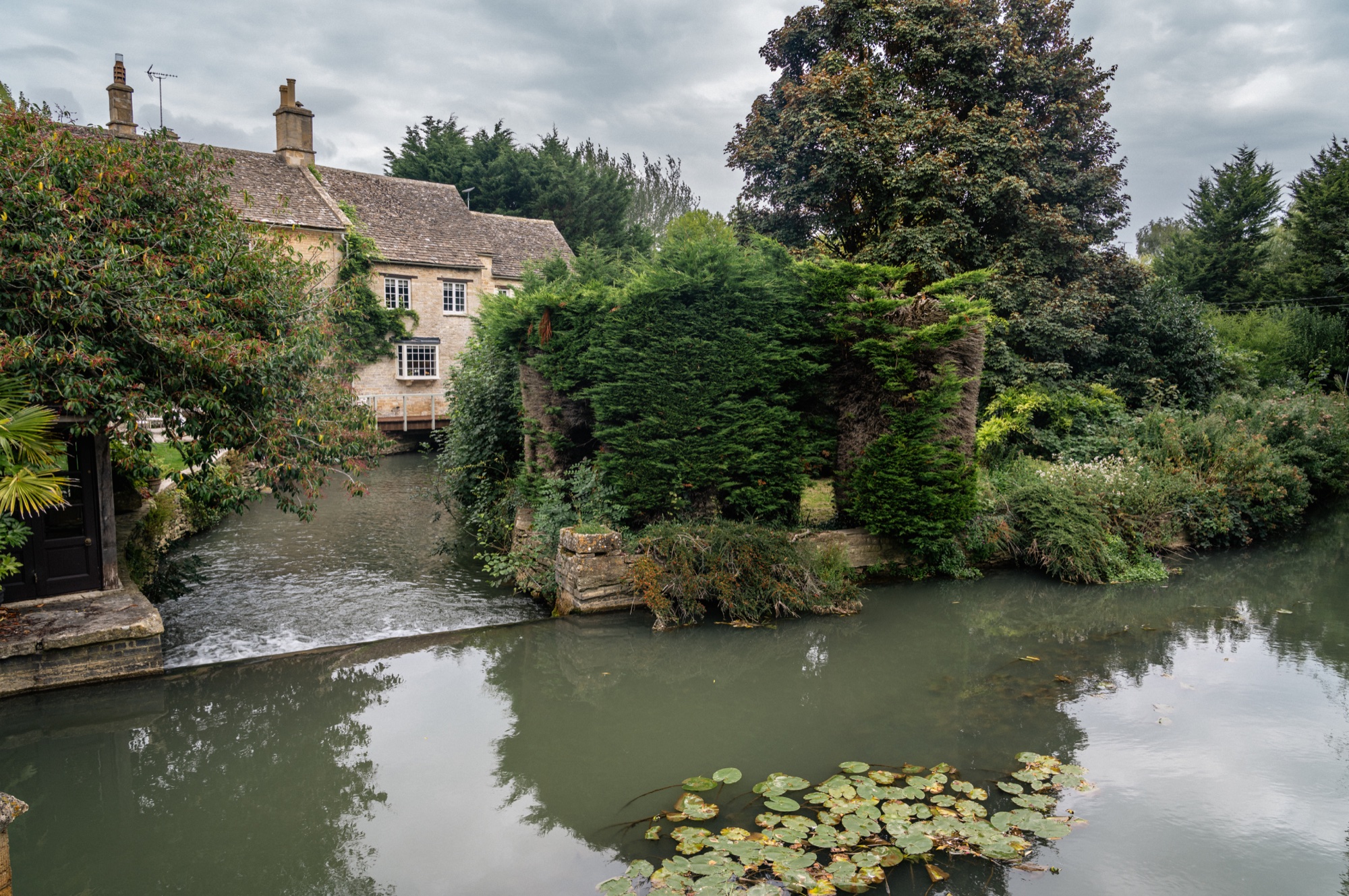
Water and weather in the Cotswolds
In the first six frames, I stayed close to the materials that define the Cotswolds. Honey-colored limestone repeats in walls, roofs, bridges, and cottages, while water and plants soften the hard edges. I used mostly ISO 100 at f/9 to keep detail from the foreground plants through the distant stone.
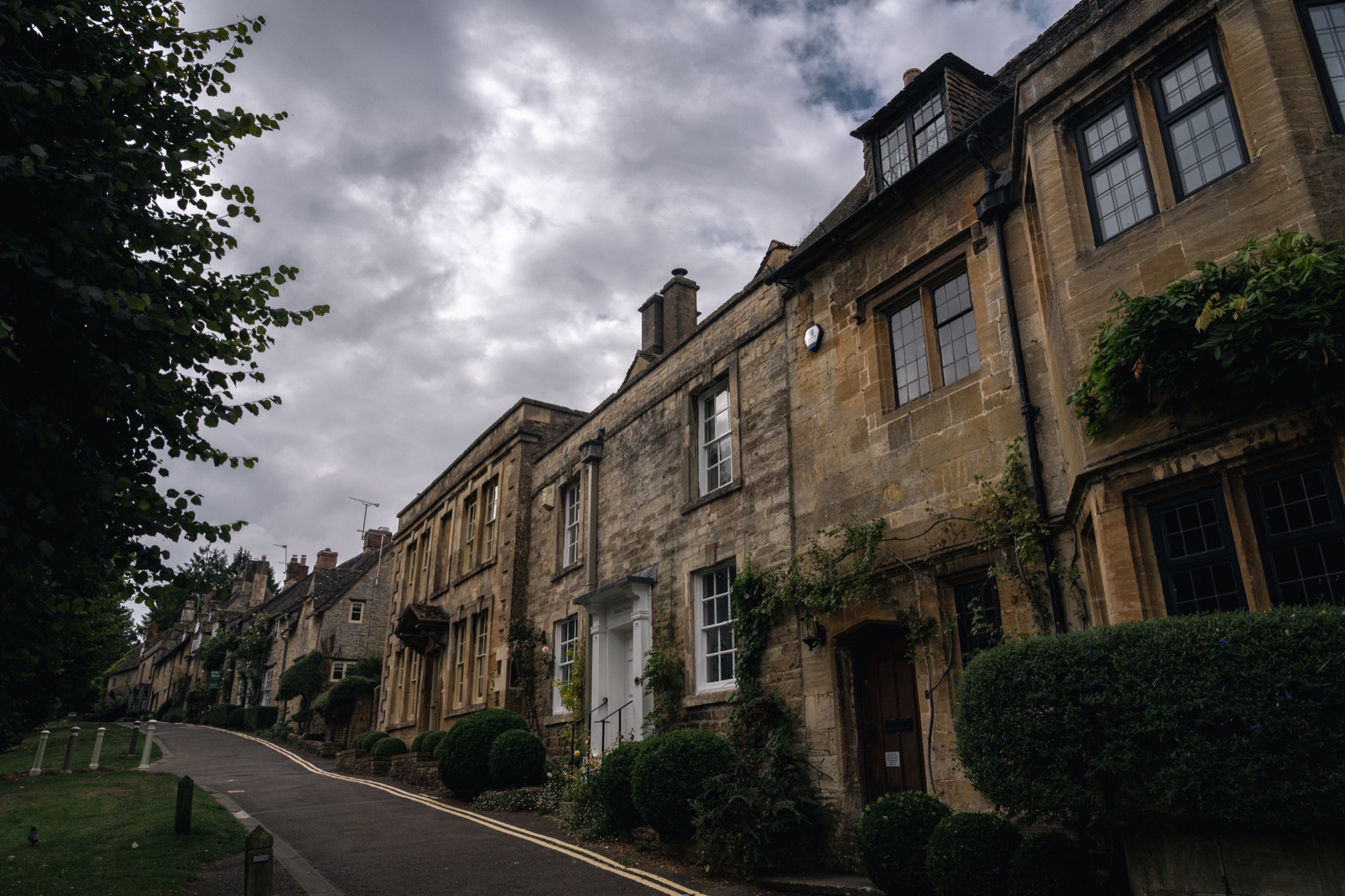
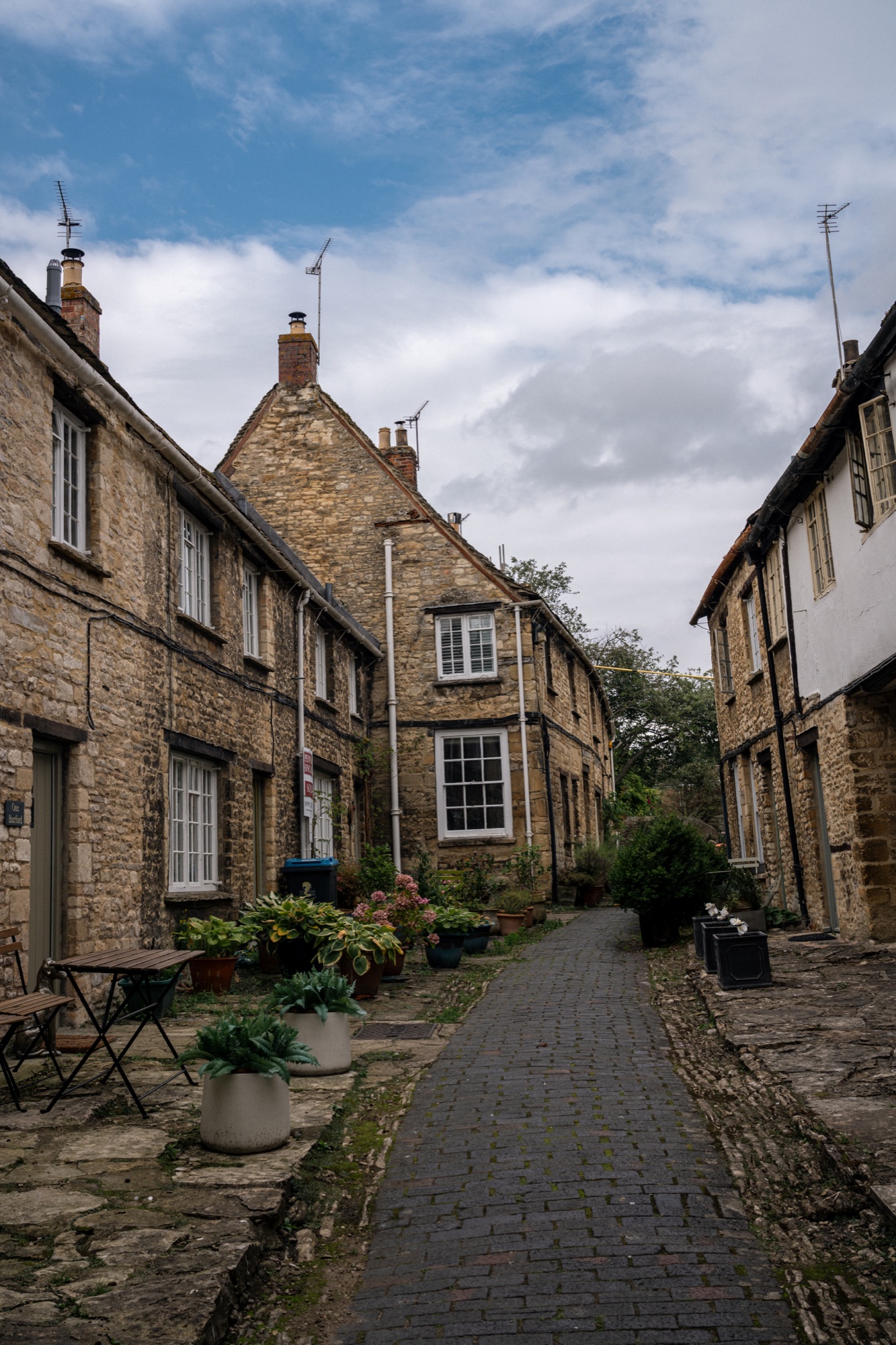
The next lane narrows the view. I photographed it vertically at 36mm, replacing the broad sky with close walls, potted flowers, old windows, and a narrow strip of blue above the rooftops. The vertical frame makes it feel like a place to enter on foot rather than a distant village view.
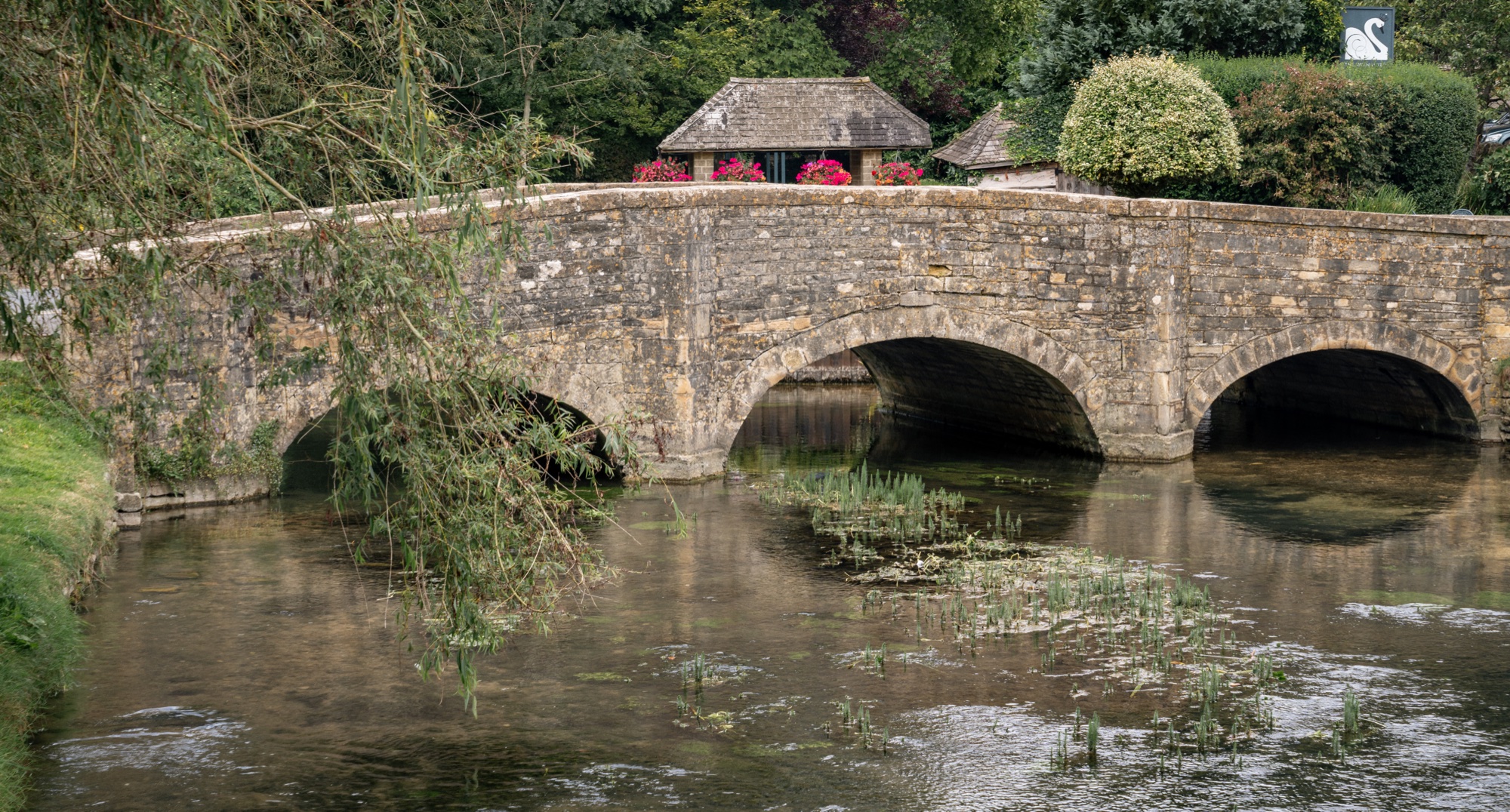
At the twin-arch bridge, I opened the view again. A 59mm lens pulls the bridge, water, and garden into layered horizontal bands. The slower 1/25-second exposure keeps the river calm enough to hold the reflection without making the moving water completely still.
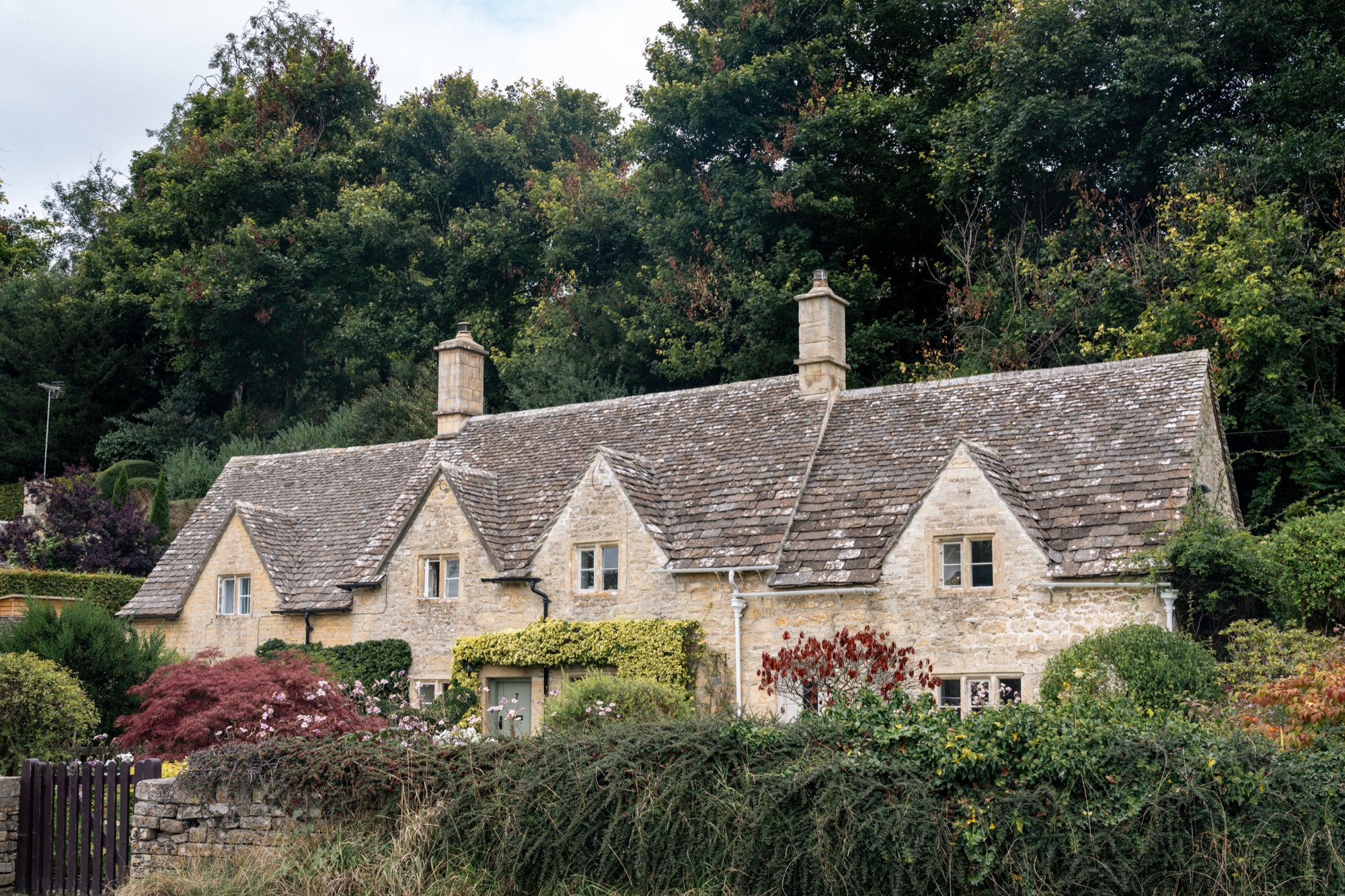
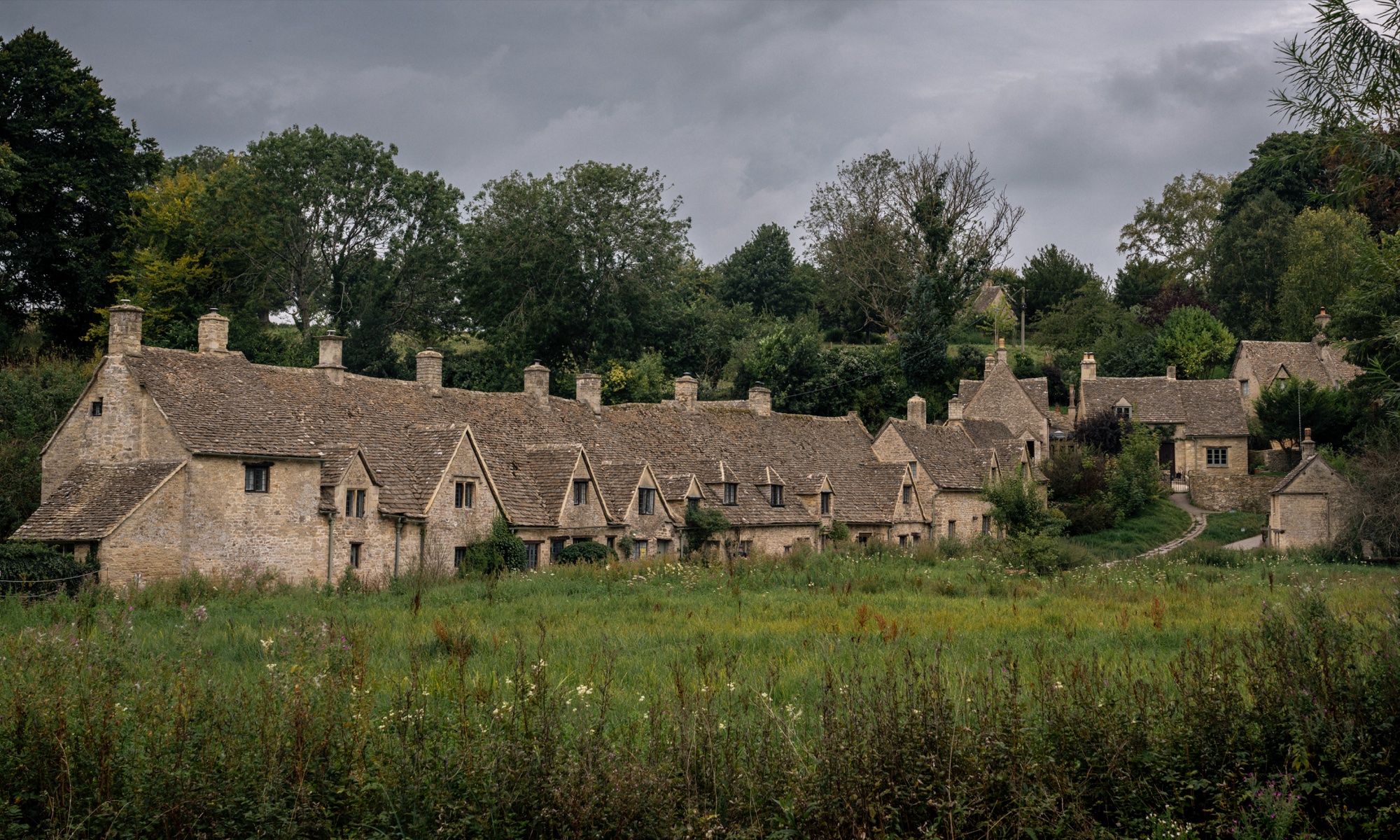
For the last two Cotswolds views, I stepped back from the streets and riverbanks. One cottage sits closely inside a garden, with its pale façade surrounded by deep greens and warmer seasonal color. The next group is across an open meadow, under a heavier sky, with the long row of roofs appearing to grow out of the field.
Following stone into Oxford
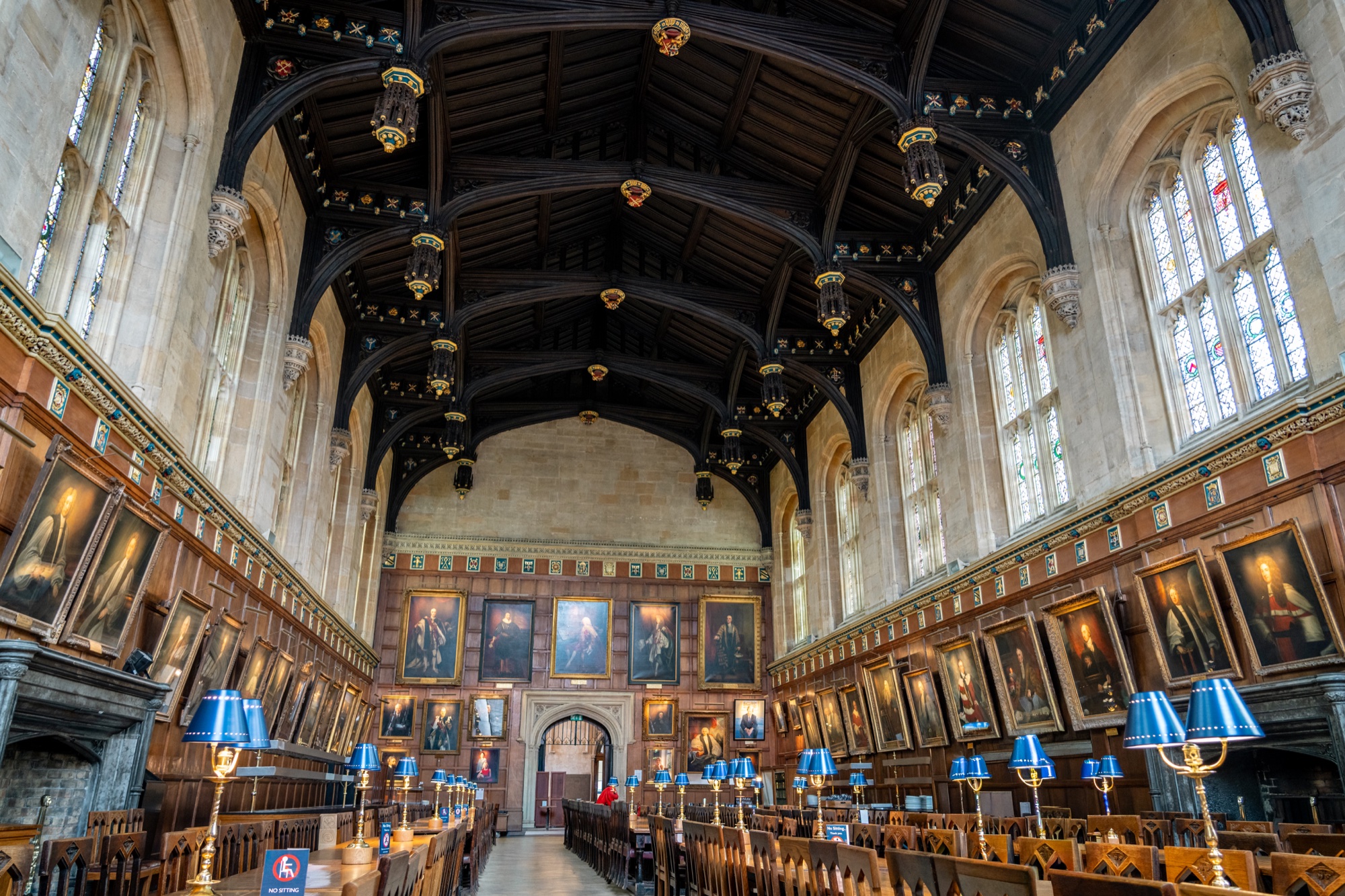
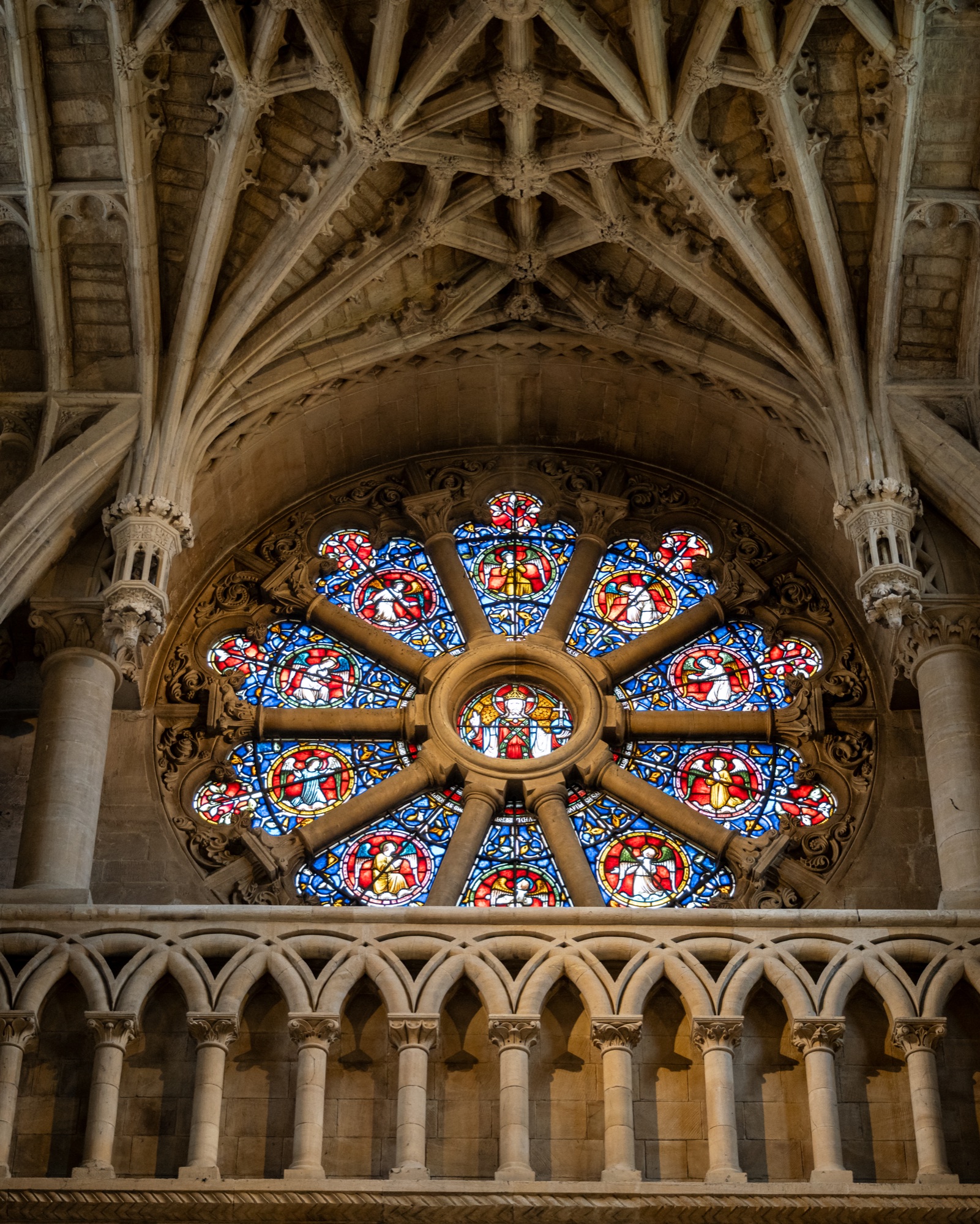
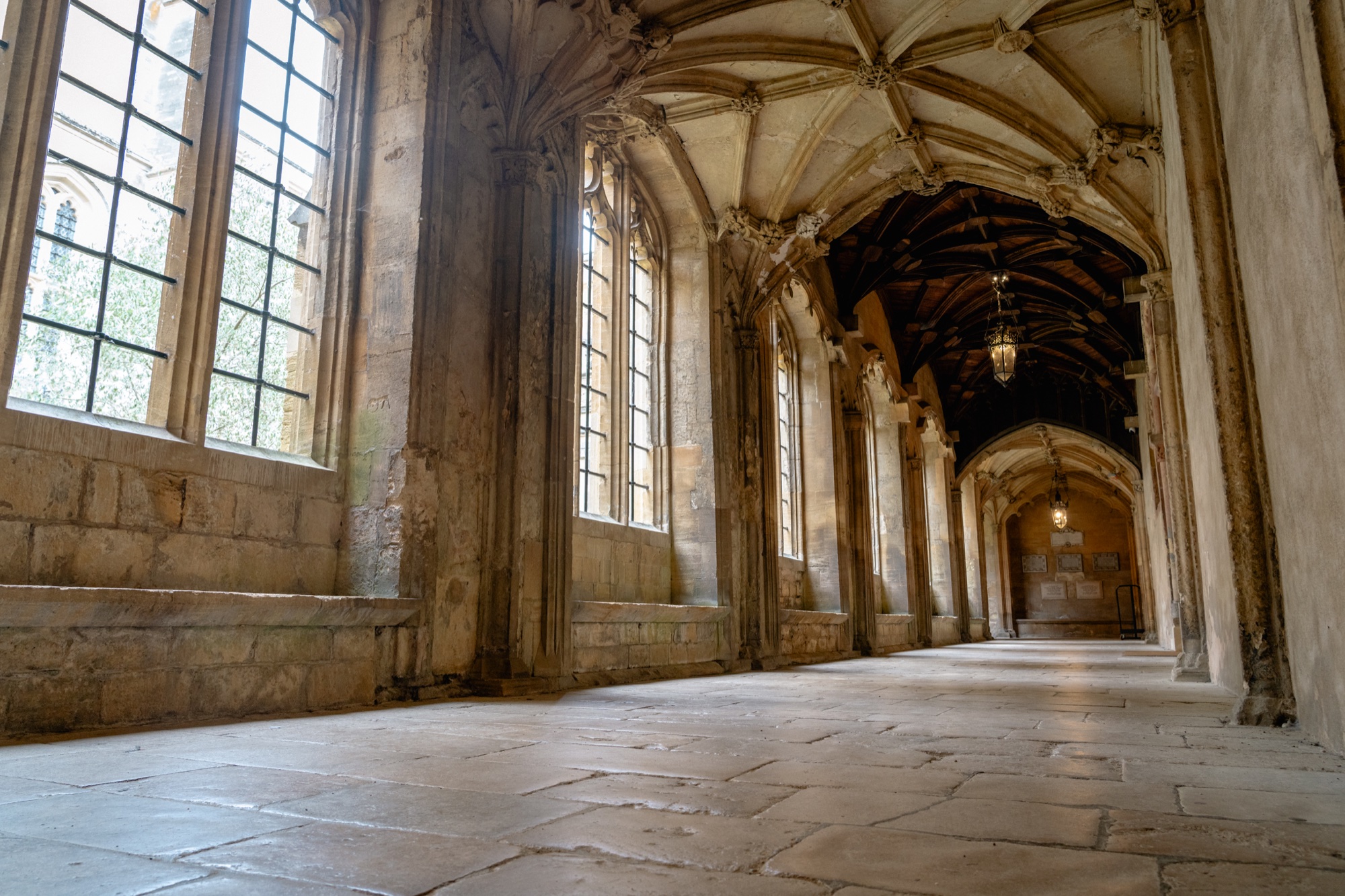
The final four photographs move into Oxford, but stone still holds the group together. What changes is the light. I shifted to ISO 800 and wider apertures inside the darker hall, cathedral, and cloister, keeping the carved ceilings, stained glass, and worn floors visible without making the rooms look brighter than they were.
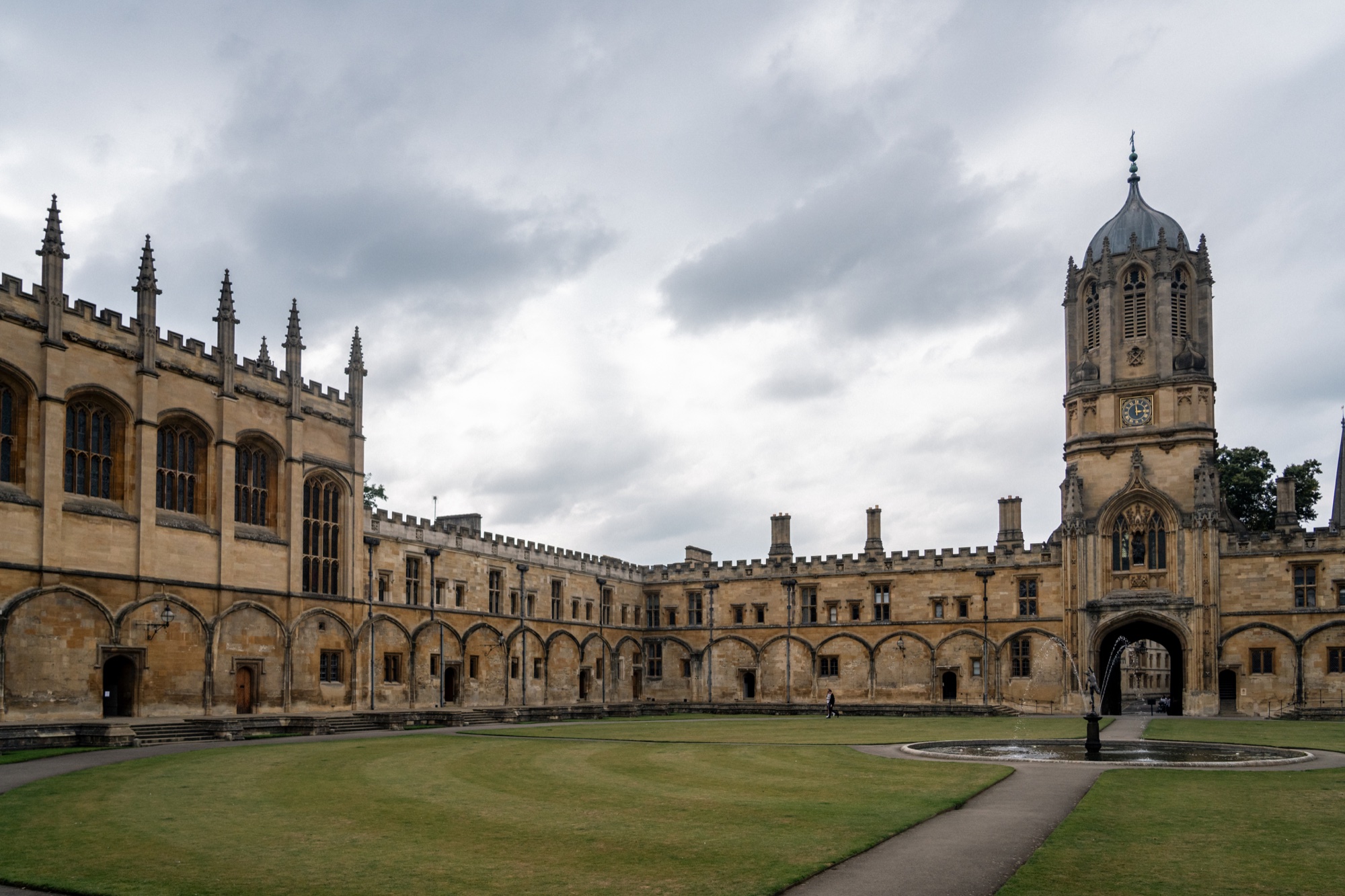
Outside again, the quadrangle opens the scale. The broad lawn and sky give the architecture room, while the repeating arches and roofline lead toward the central tower. After the close Cotswolds lanes, this space feels much more formal and expansive.
At the cathedral rose window, I focused on the circle of color inside the carved stone. I photographed it vertically at 49mm and left out most of the surrounding building, so the glass, tracery, ribs, and columns fill the frame.
I finished in a cloister where sunlight enters from the side and crosses a worn stone floor. At 24mm, the arches repeat through alternating light and shadow. It brings the day back to the same material I started with, only here the stone is indoors and visibly worn.
What connects the two places
During those four hours, I kept noticing how weather and light changed the stone. In the Cotswolds, the walls and bridges sit among water, gardens, and meadow. In Oxford, the stone appears in halls, windows, and cloisters. The photographs begin outside in a wide landscape and finish indoors with light crossing the cloister floor.