I made these thirteen photographs while walking through London on August 22, 23, and 25, 2024. I moved between wide city views and close architectural details, from the London Eye and the Thames to Gothic arches, timber buildings, glass towers, and one red bus in motion.
Nine of these photographs are available as wall art in my MarkBartaPhotography Etsy shop. Click an available image or its caption button to see that photograph on Etsy.
The river establishes the scale, August 22
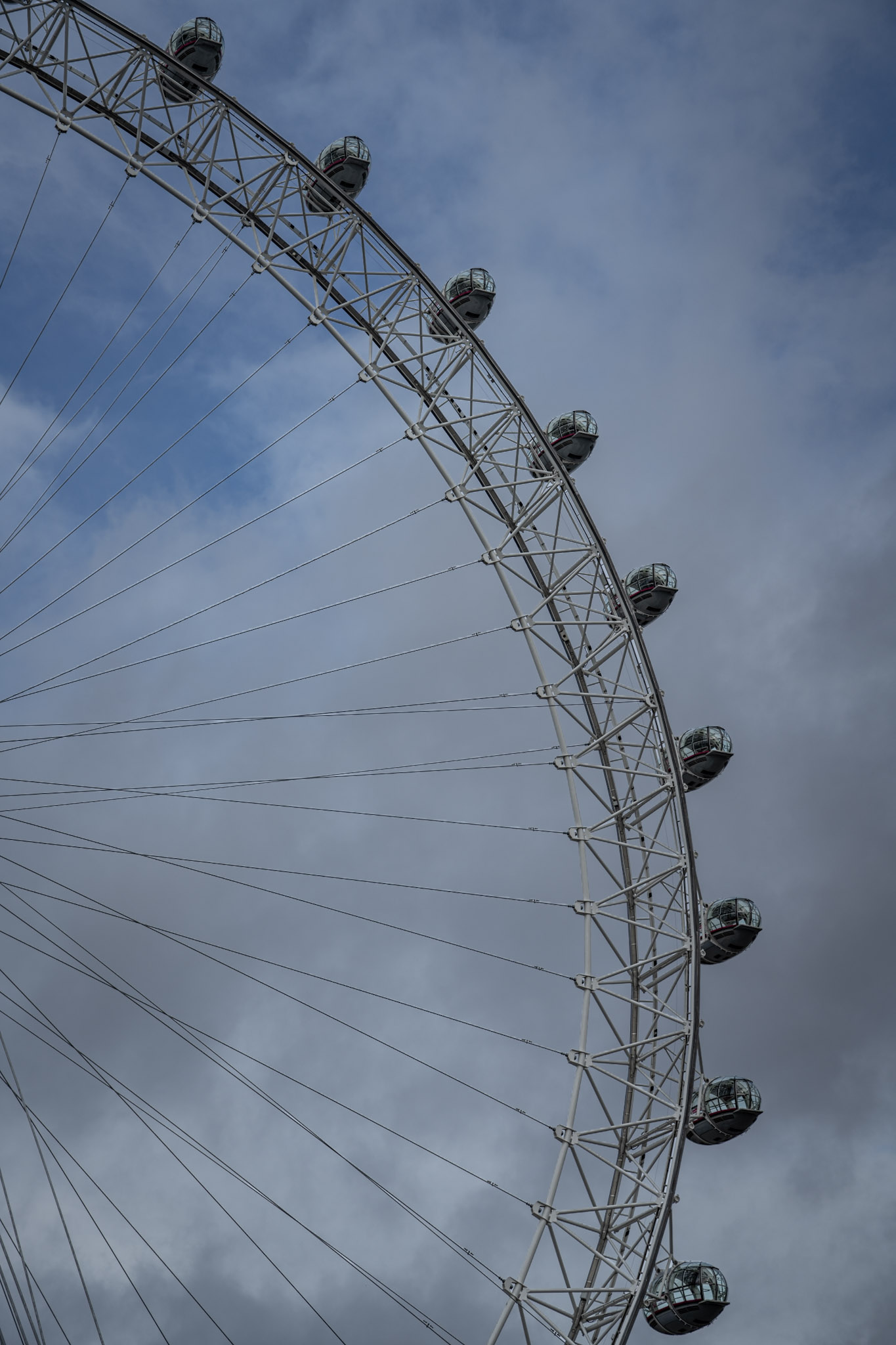
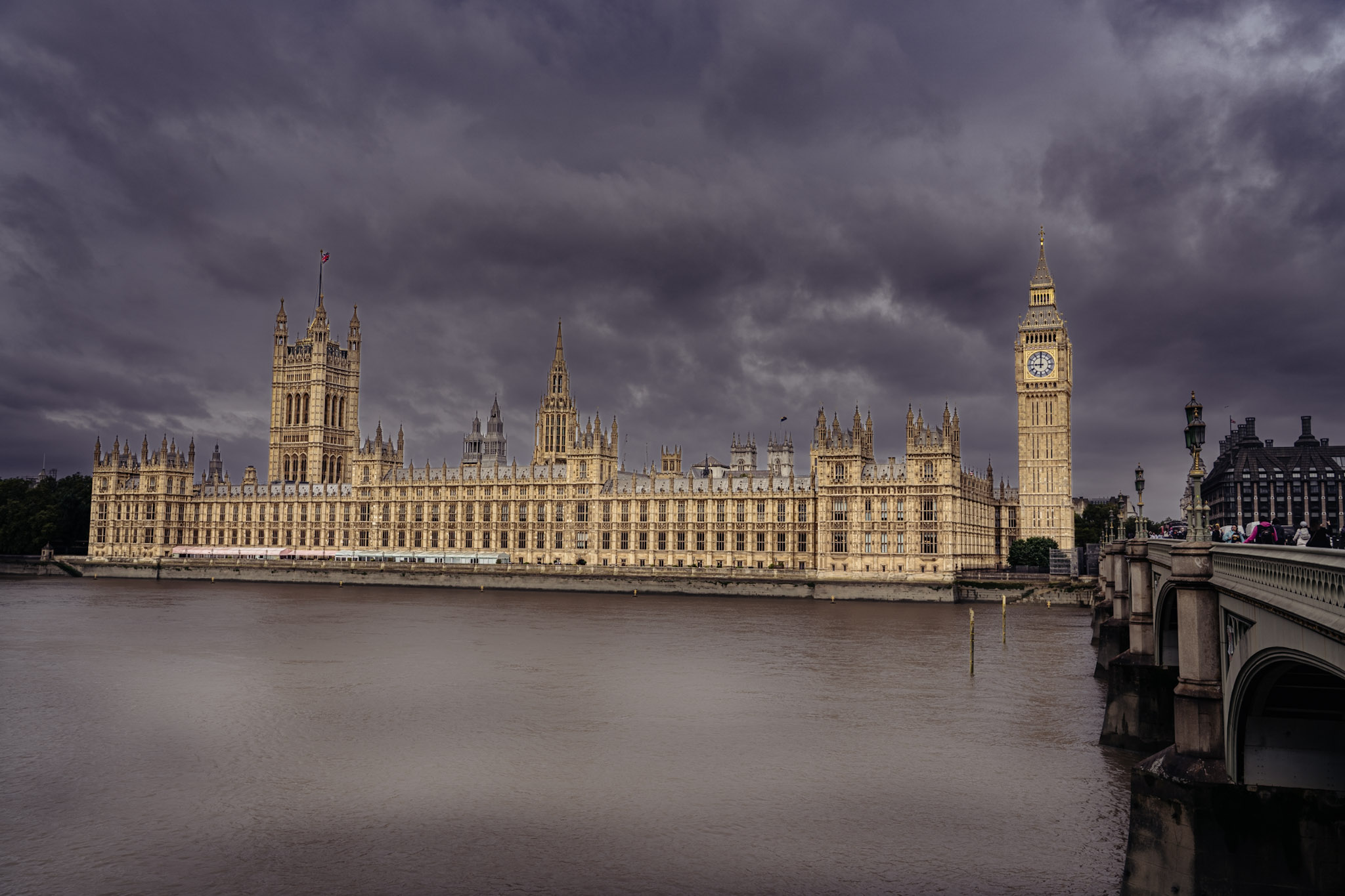
I opened with only part of the London Eye. Its cabins, spokes, and cables cut diagonally through a wide field of clouds. For the next frame, I stepped back to the opposite bank of the Thames. At 30mm, the Palace of Westminster and Elizabeth Tower stretch across the river while Westminster Bridge enters from the right.
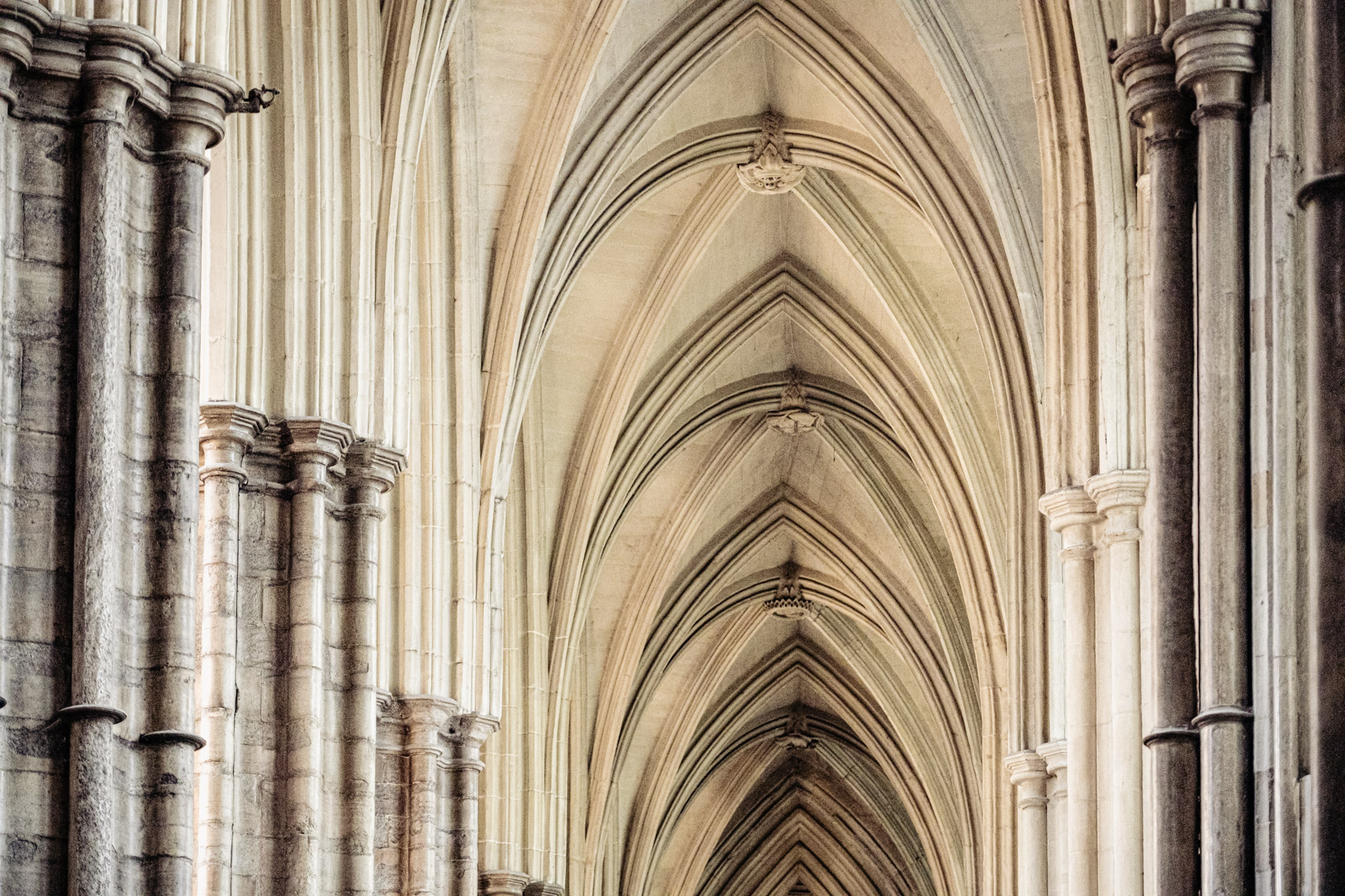
Inside Westminster Abbey, I traded the open river view for a tight frame of stone. At 105mm, the floor, windows, and most of the room disappear. What remains is a repeating pattern of pointed arches, clustered columns, and ribbed vaulting. ISO 12,800 kept the structure visible in the low light, and the longer lens pulled each arch closer to the next.
The city opens from above
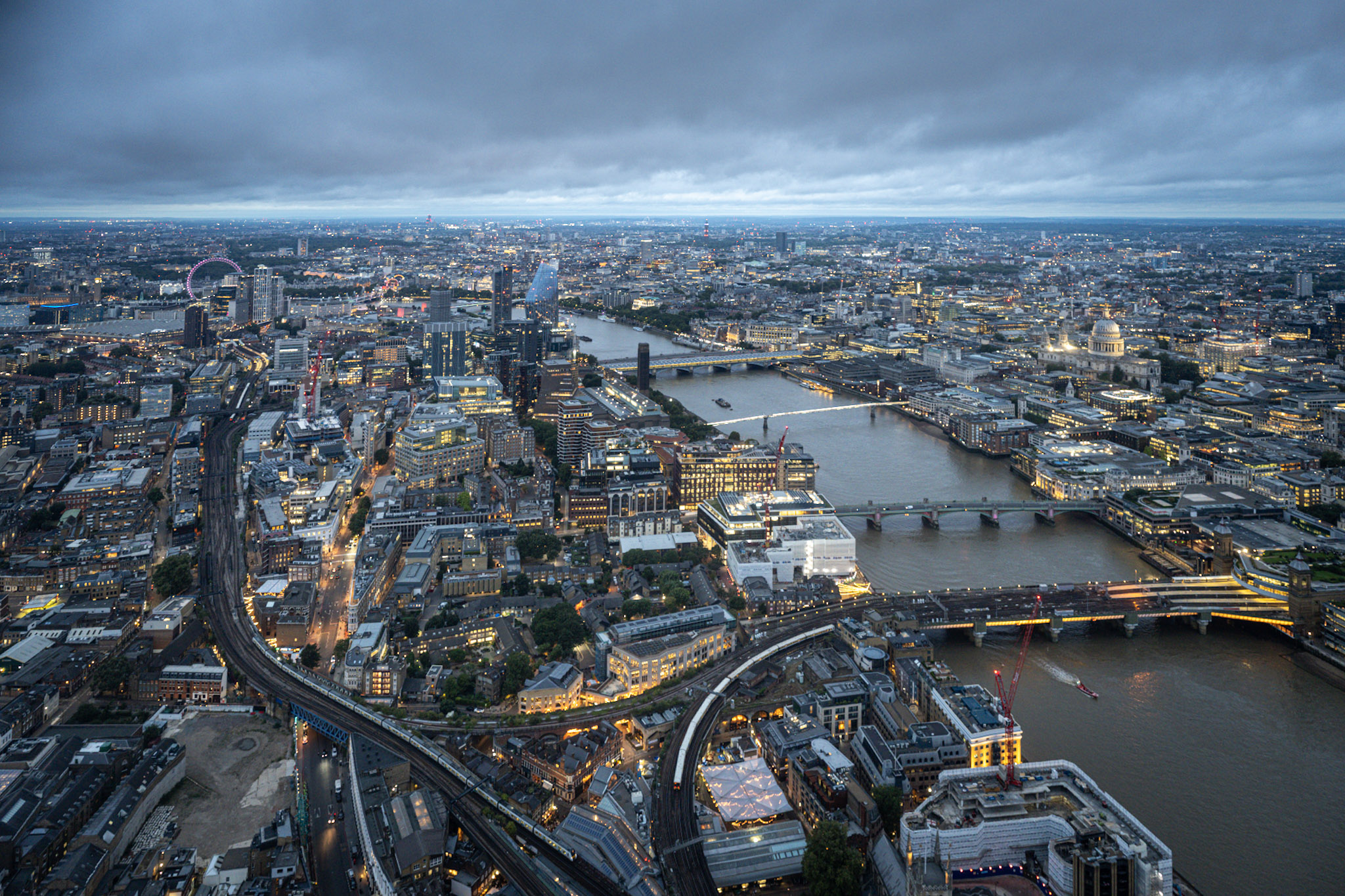
Later that day, I went wide again from The Shard. A 20mm lens gathers the river, bridges, rail lines, rooftops, and distant horizon in one frame. The Thames is the one continuous line through the dense streets and buildings. A wide aperture and slower shutter kept the fading daylight in the city without losing the clouds above it.
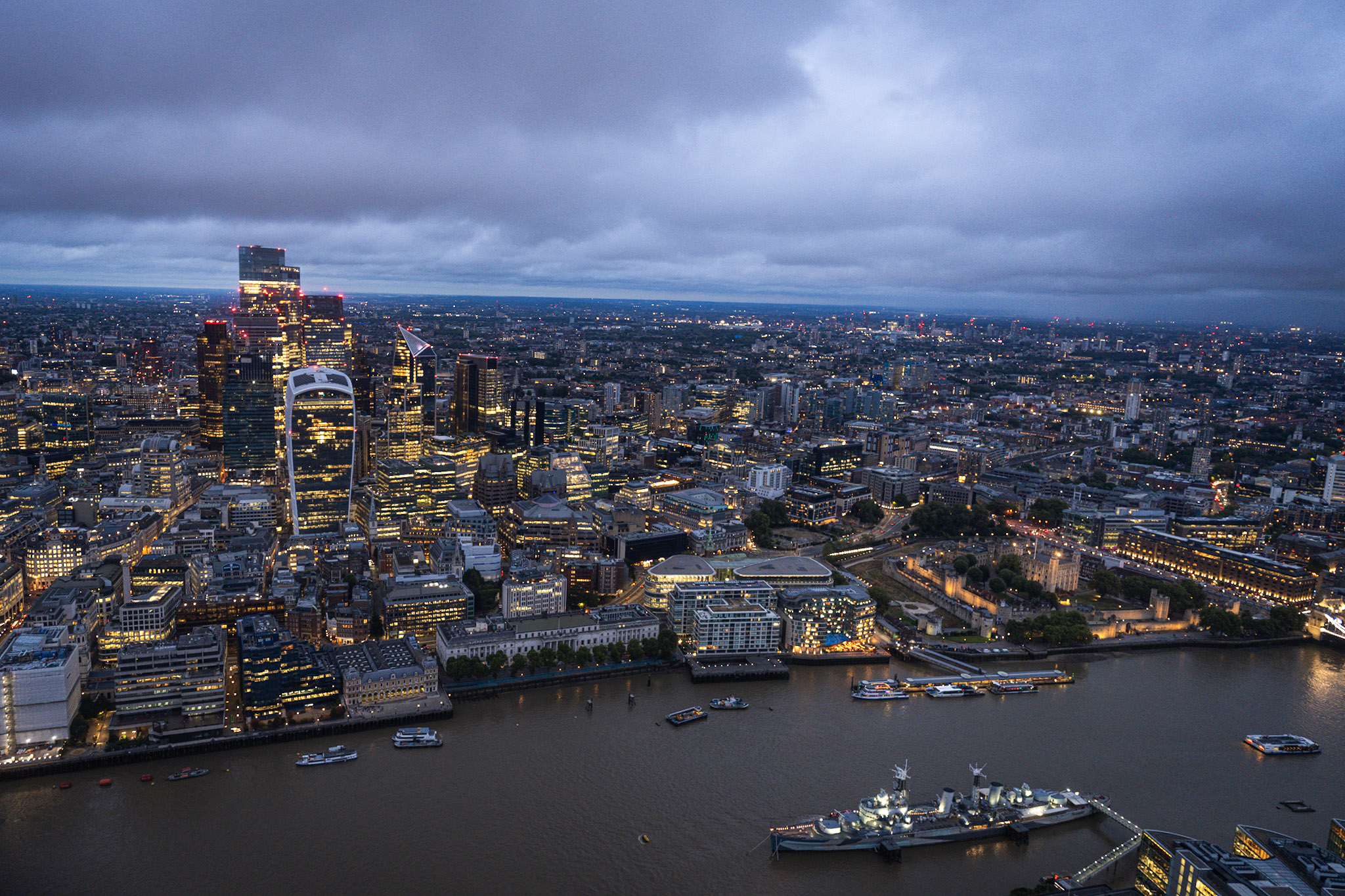
For the second high view, I turned toward the City. Lights begin to separate the towers from the darkening streets, and HMS Belfast is a small bright shape on the water below. A low band of clouds keeps the skyline from becoming a simple silhouette, so the glass, river, and weather remain layered together.
Two houses, two kinds of structure, August 23
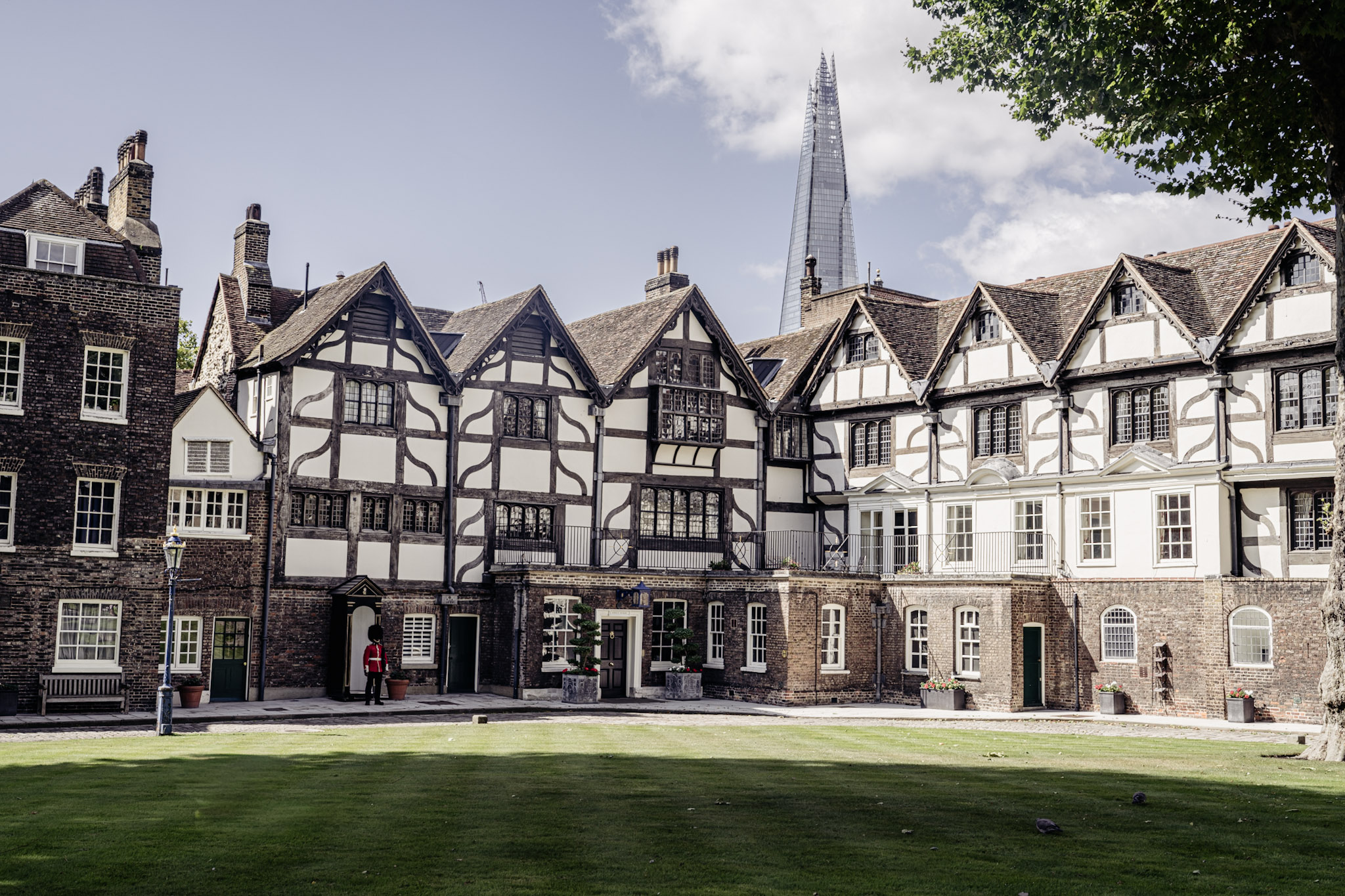
The next pair starts on Tower Green inside the Tower of London. The timber-framed King’s House and its neighbouring residences run across the frame, with The Shard rising behind them. At 39mm and f/10, the old timber and tile remain clear against the glass tower tapering to a point in the distance.
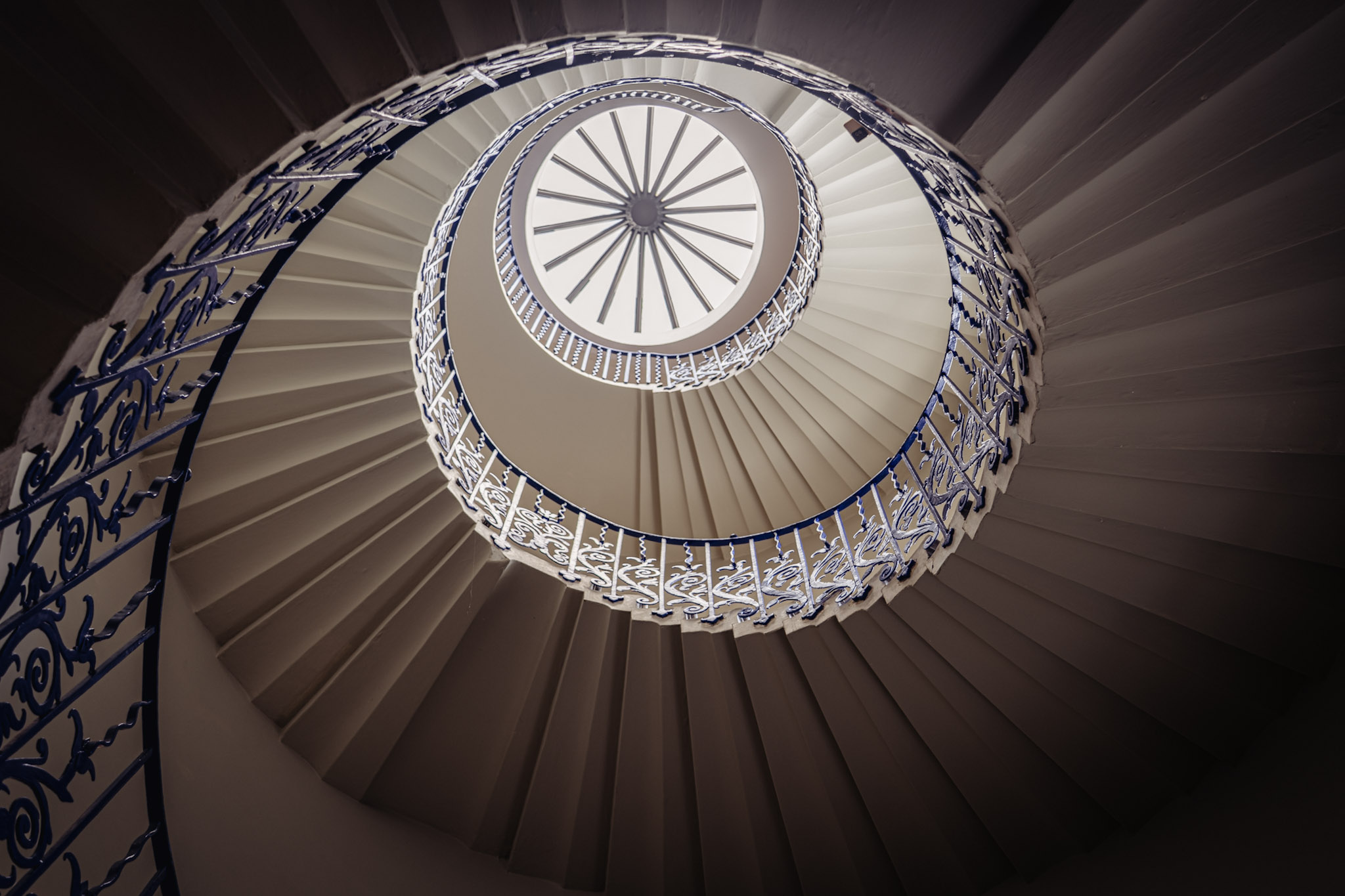
At the Queen’s House in Greenwich, I looked inward and up. The Tulip Stairs form a self-supporting spiral, with blue wrought iron following the curve toward the skylight. Photographed from below at 34mm, the circular opening echoes the London Eye from the first photograph, only now at the scale of a room.
From small repetitions to whole buildings, August 25
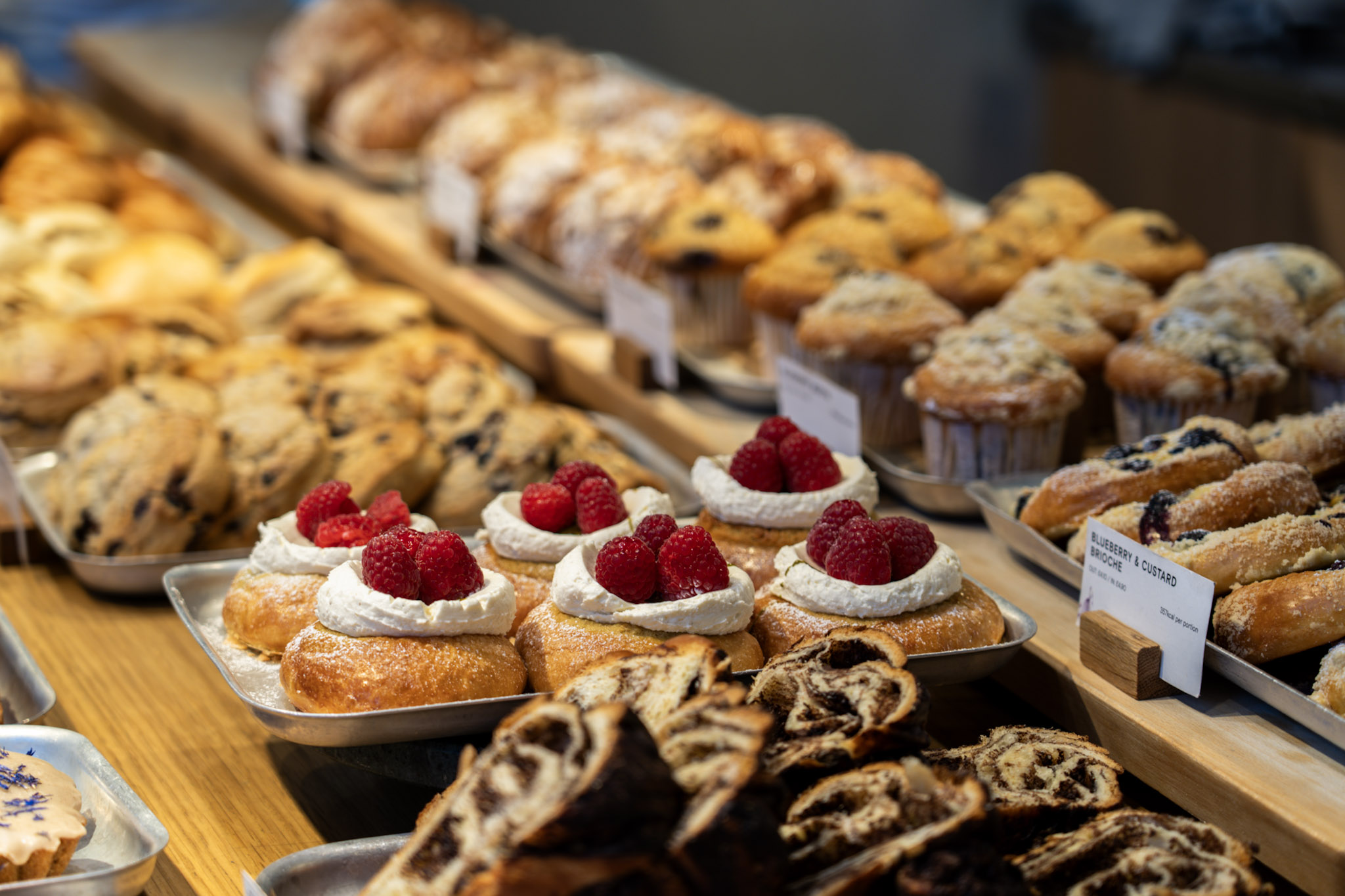
I began the final day closer than anywhere else in the series. At 94mm, a bakery display becomes overlapping rows of buns, pastries, and muffins. Shallow focus keeps the raspberries and cream near the center sharp while the rest of the case softens into brown, gold, and white. It is a small version of the same patterns I had been finding in the buildings.
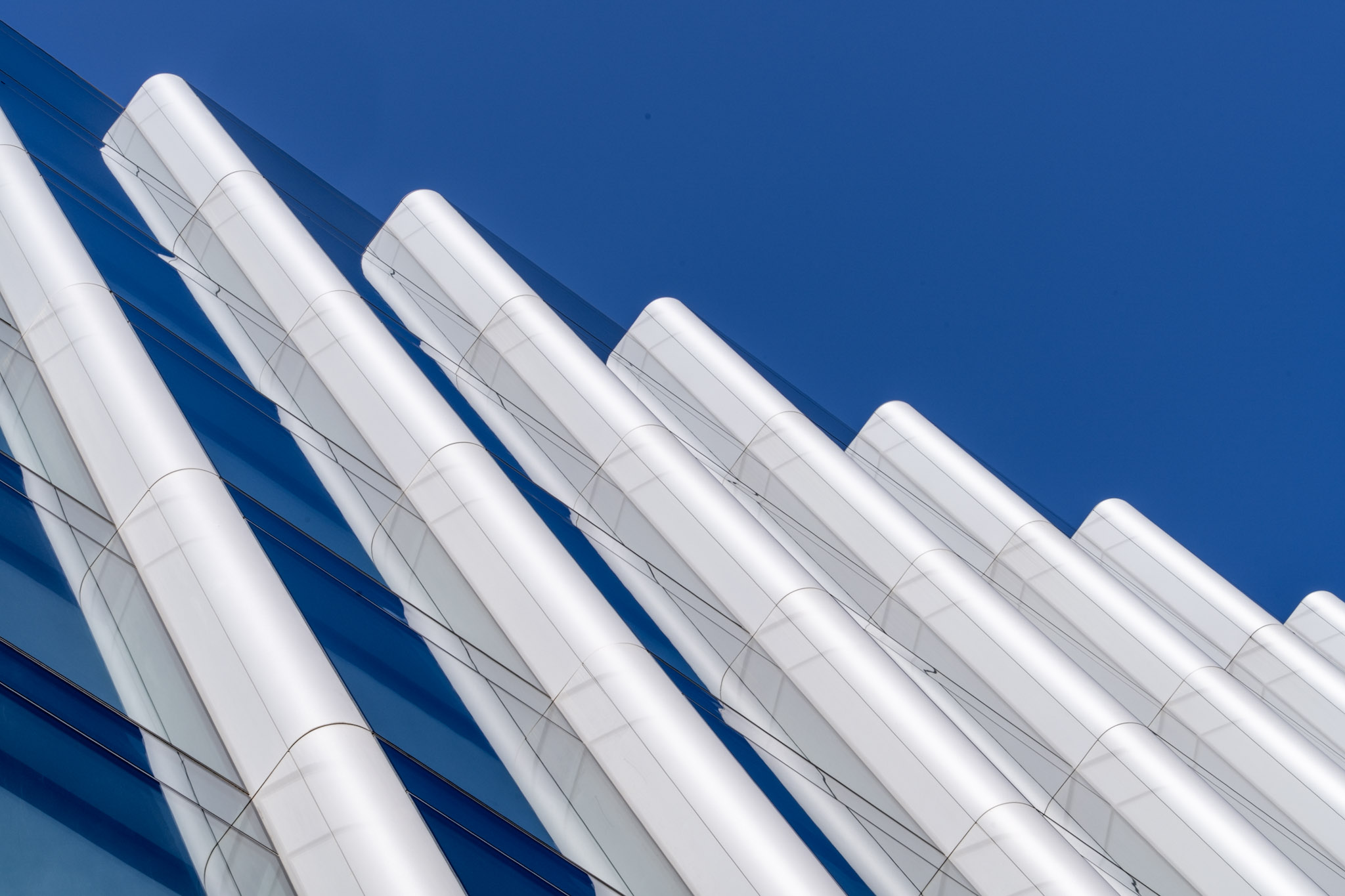
Outside, I found the same kind of repetition on building façades. Over the next two hours, I walked through the City from Monument Street to Tower Bridge. At The Monument Building, sixty-nine twisting metal ribbons echo the gilded flames on the nearby Monument. Photographed at 105mm against blue glass and sky, the building almost disappears into a diagonal pattern of rounded forms, reflections, and narrow seams.
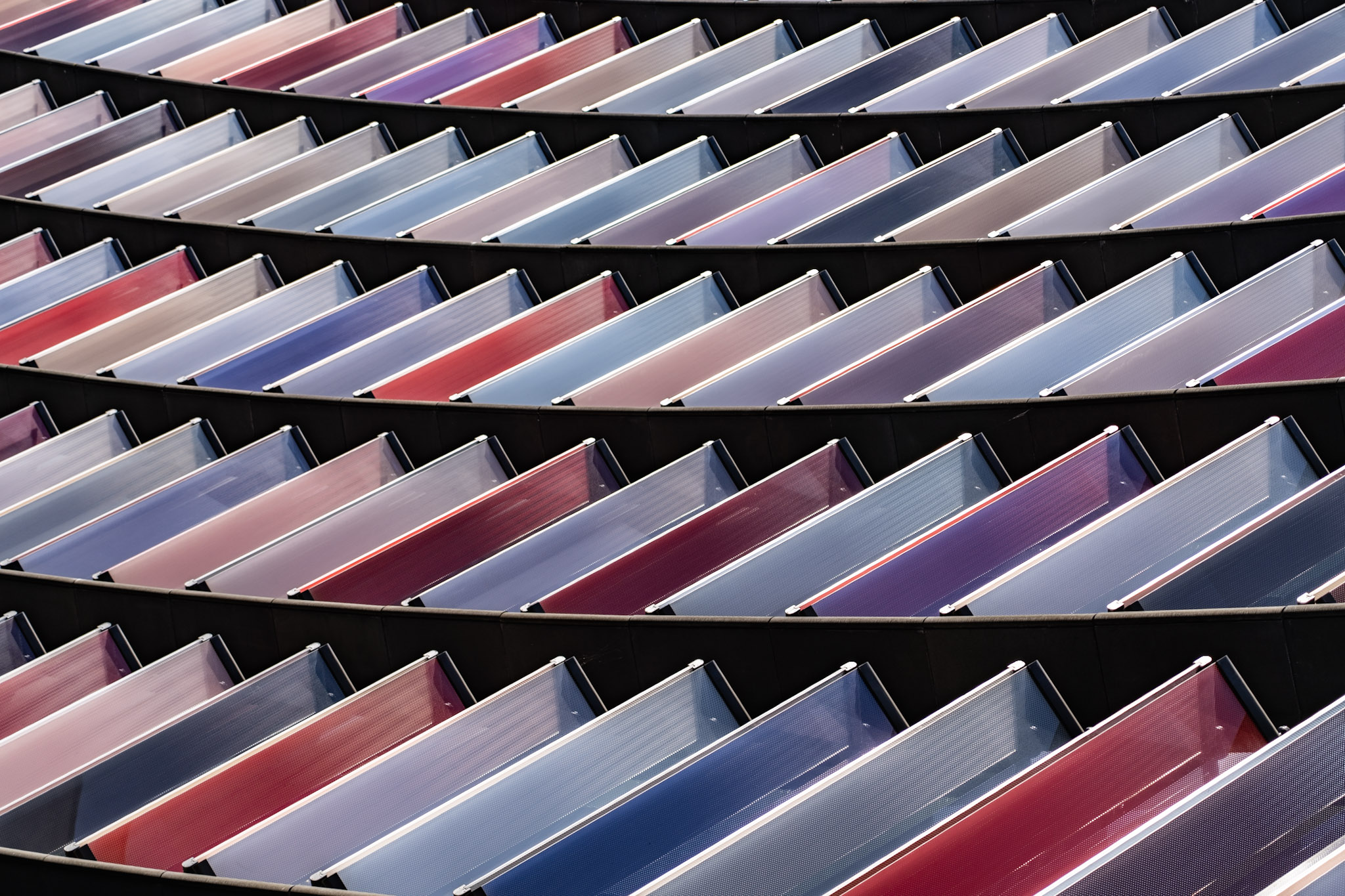
At Two New Ludgate, the white curves give way to rows of movable glass louvres. Muted reds, blues, and silvers make long diagonal bands across a dark base. I stayed at 105mm and left out the building’s edges, so the frame is mostly color and spacing.
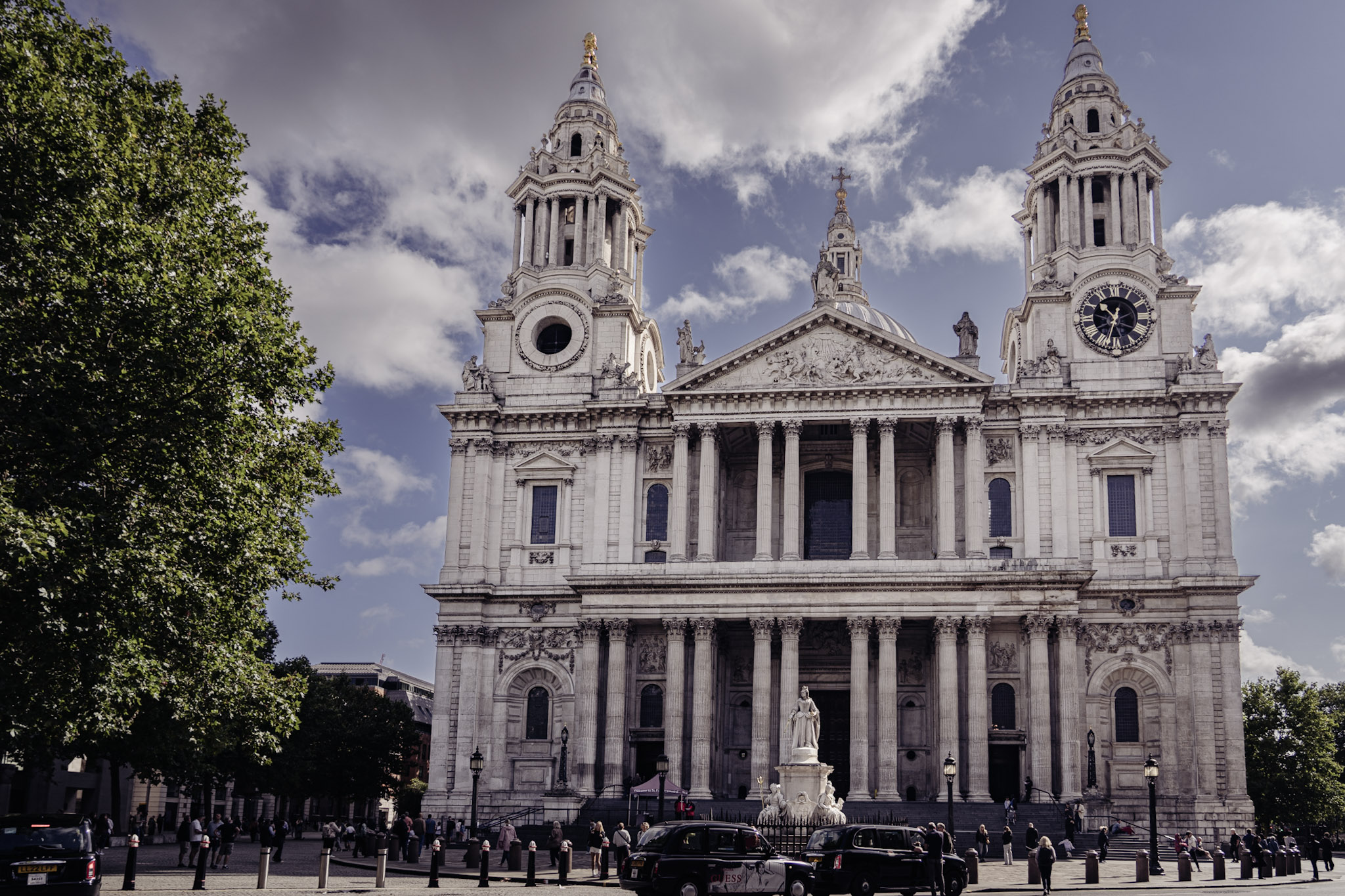
At St Paul’s Cathedral, I brought the whole building back into the frame. A 24mm view lets the west front fill the image while keeping the sky, tree, taxis, and people at street level. After the two close façade studies, the columns and towers become another kind of repeated pattern.
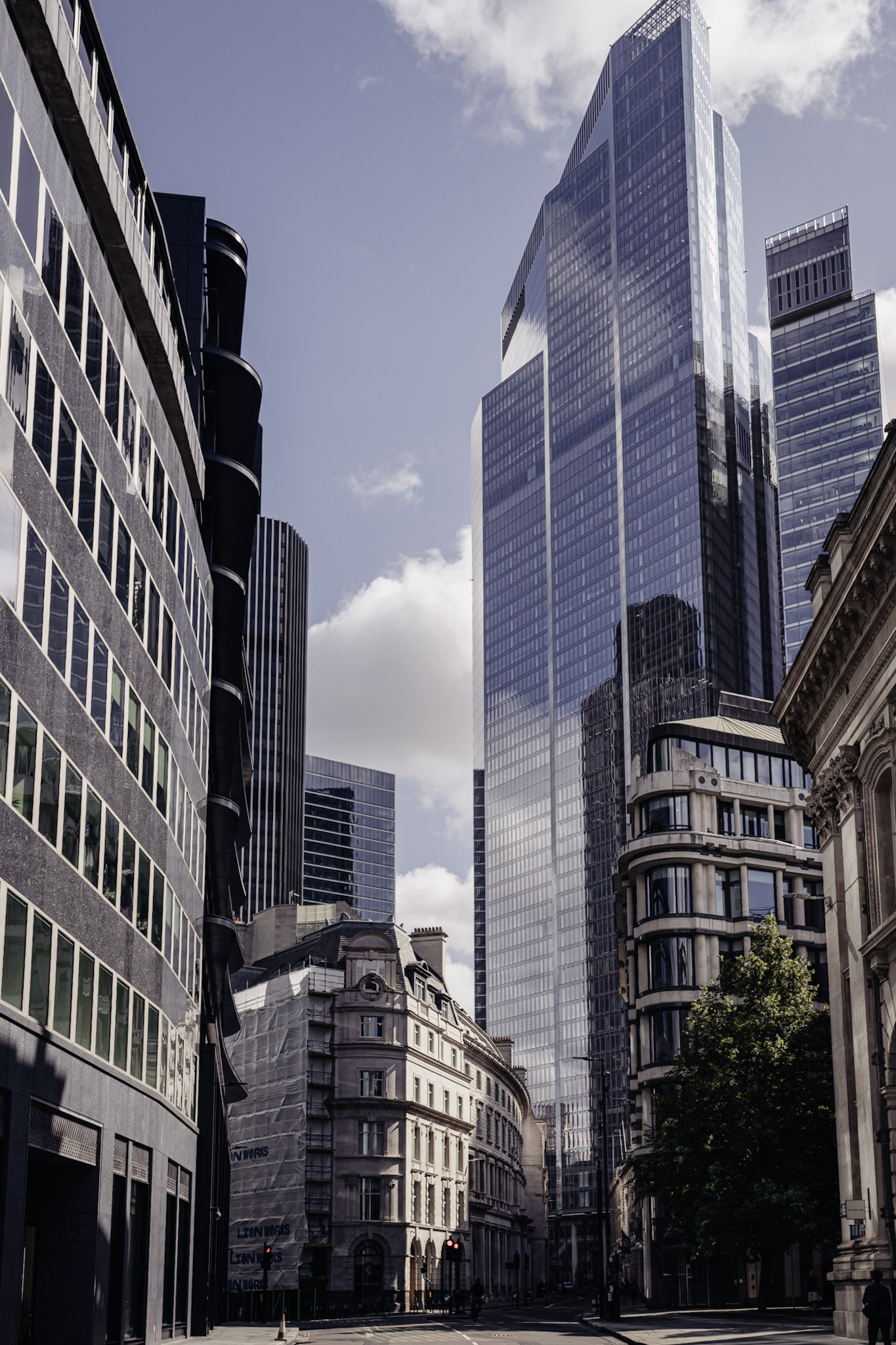
The next photograph narrows the street again. 8 Bishopsgate rises in stacked glass blocks between older stone and concrete façades. Its reflective surfaces catch the pale sky above a deep band of shade. The vertical frame leaves very little pavement, so the tower has to be seen through the buildings around it.
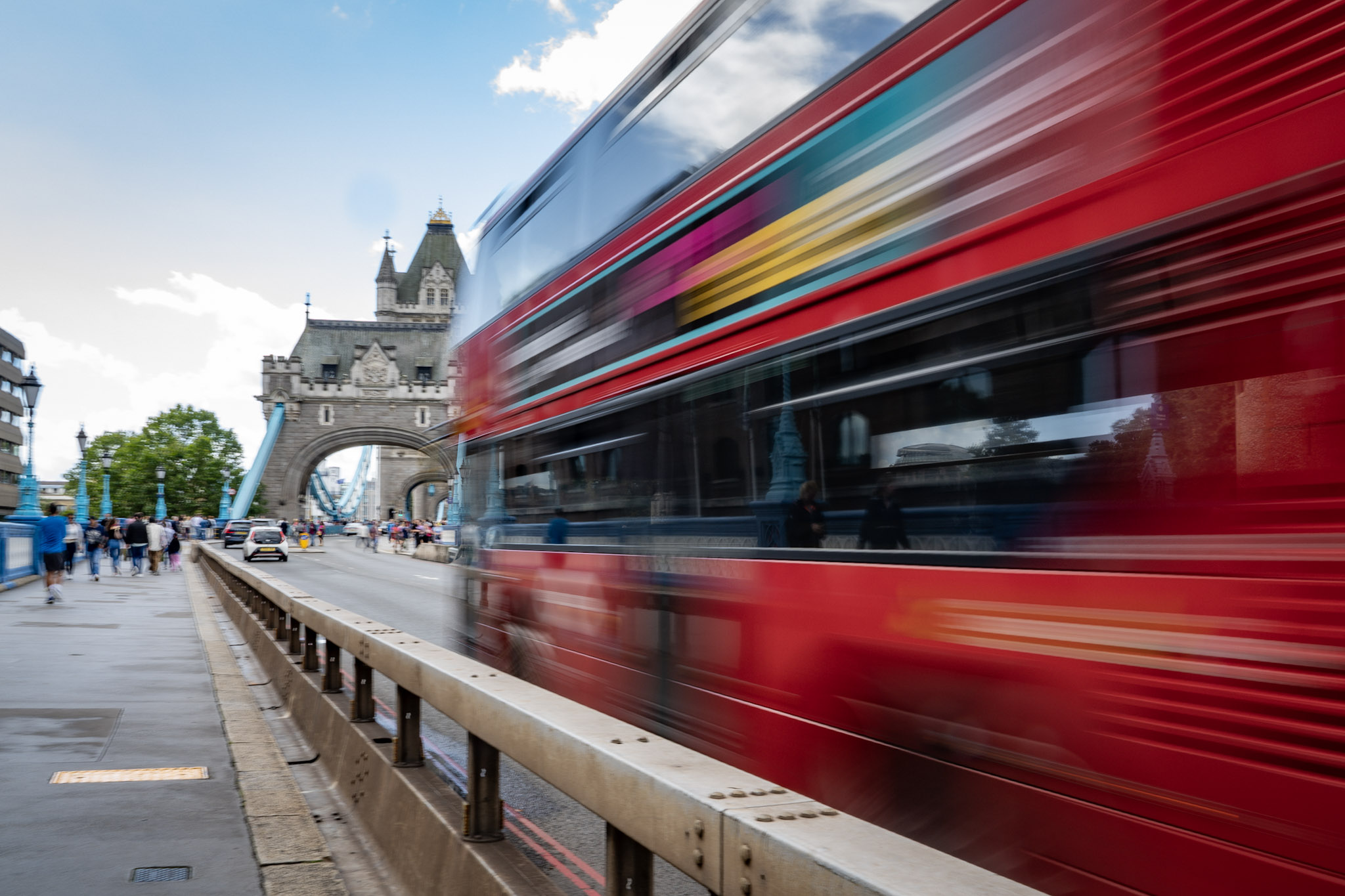
I finished at Tower Bridge with a 1/6-second exposure. A red double-decker bus crosses most of the frame. Its color stays unmistakable while the windows, lettering, and passengers stretch into motion, with the stone tower holding still behind it.
What connects the photographs
I kept switching between wide city views and small details. The curve of the London Eye reminded me of the Tulip Stairs, and the ribs inside Westminster Abbey found a modern match in aluminium fins and glass louvres. The Thames first separated me from Westminster, then guided the view from above. I ended with the red bus moving through the frame at Tower Bridge.