
I like terra sigillata because it stays close to the clay. Instead of covering the pot with a thick glaze, it catches the light while leaving small marks and changes in the form visible.
What is terra sigillata?
Terra sigillata, often shortened to terra sig, is an ultra-refined clay slip. Clay is mixed with water, usually with a small amount of deflocculant, and left to settle. The coarse particles fall first. The finest portion is separated and concentrated for the surface of a pot. Those very fine particles create a soft, waxy sheen and can reach a higher gloss when polished or burnished, without making the glassy layer you get from glaze.
The name goes back much further than the contemporary studio process. The Getty Art & Architecture Thesaurus describes Roman terra sigillata as fine pottery with a smooth red finish and, sometimes, stamped decoration. A second-century example at The Metropolitan Museum of Art shows the red-gloss molded ware closely associated with the term. Studio potters now use the name more broadly for this refined-slip process and the surfaces it produces.
A surface that stays close to the form
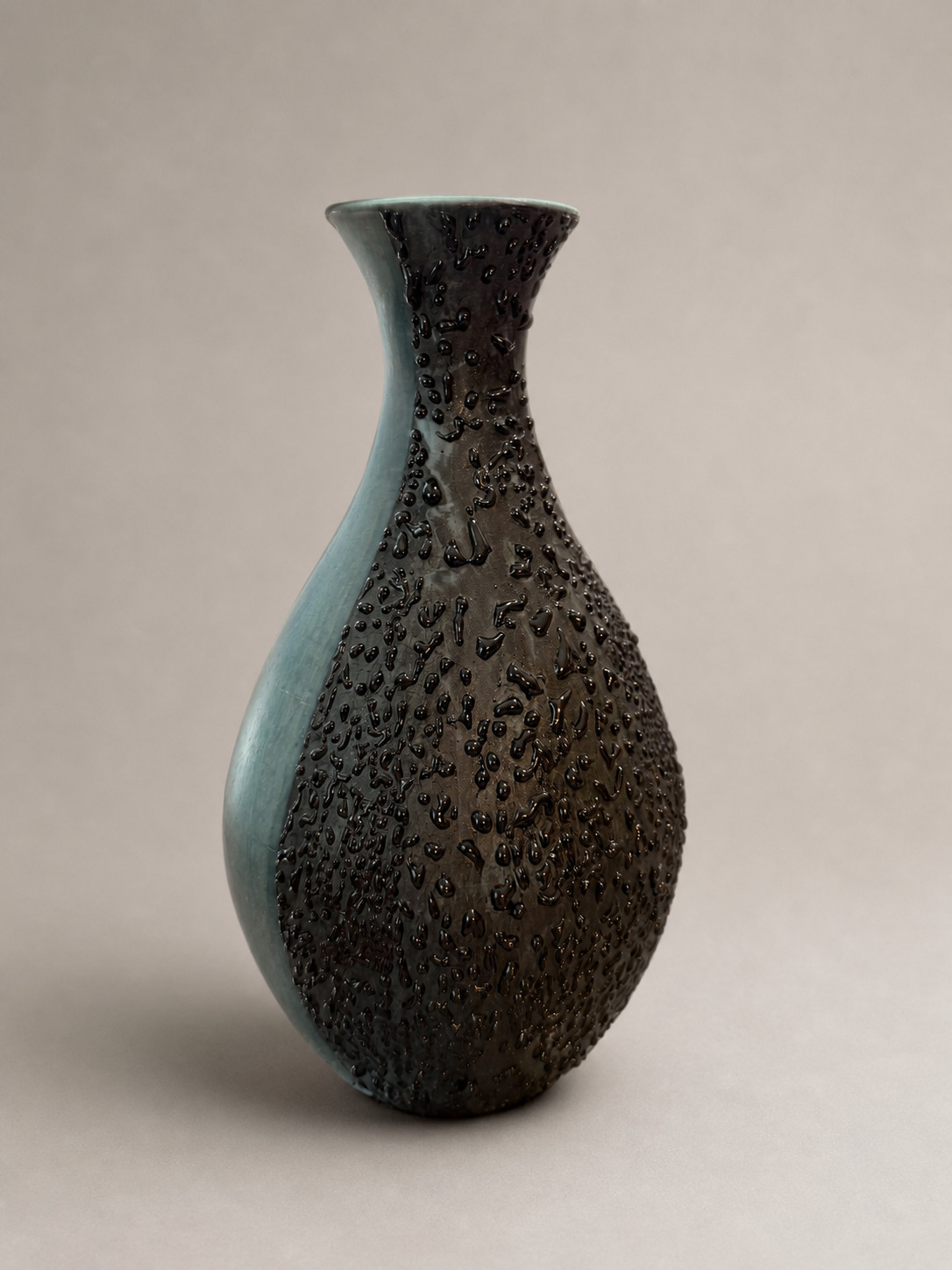
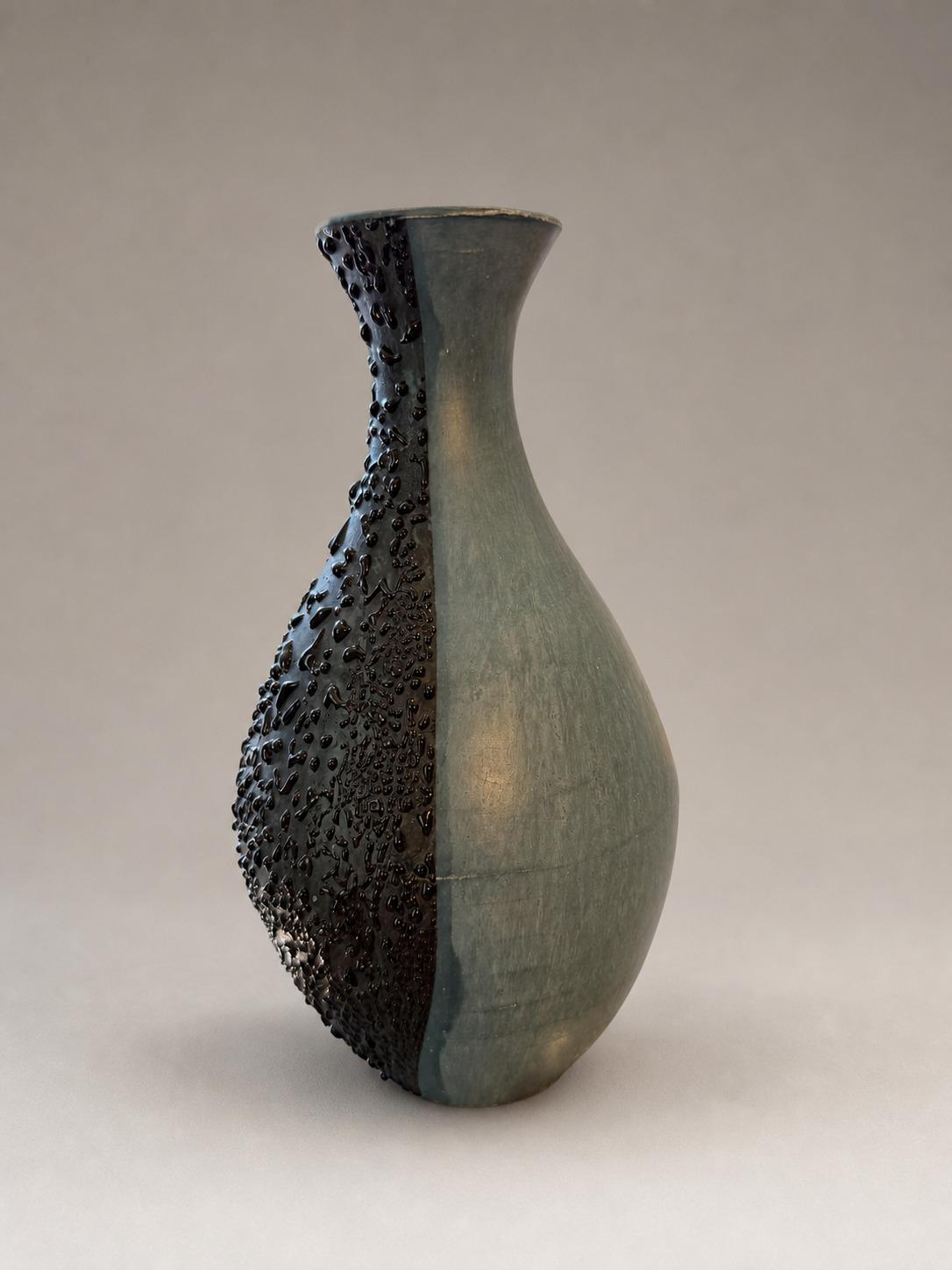
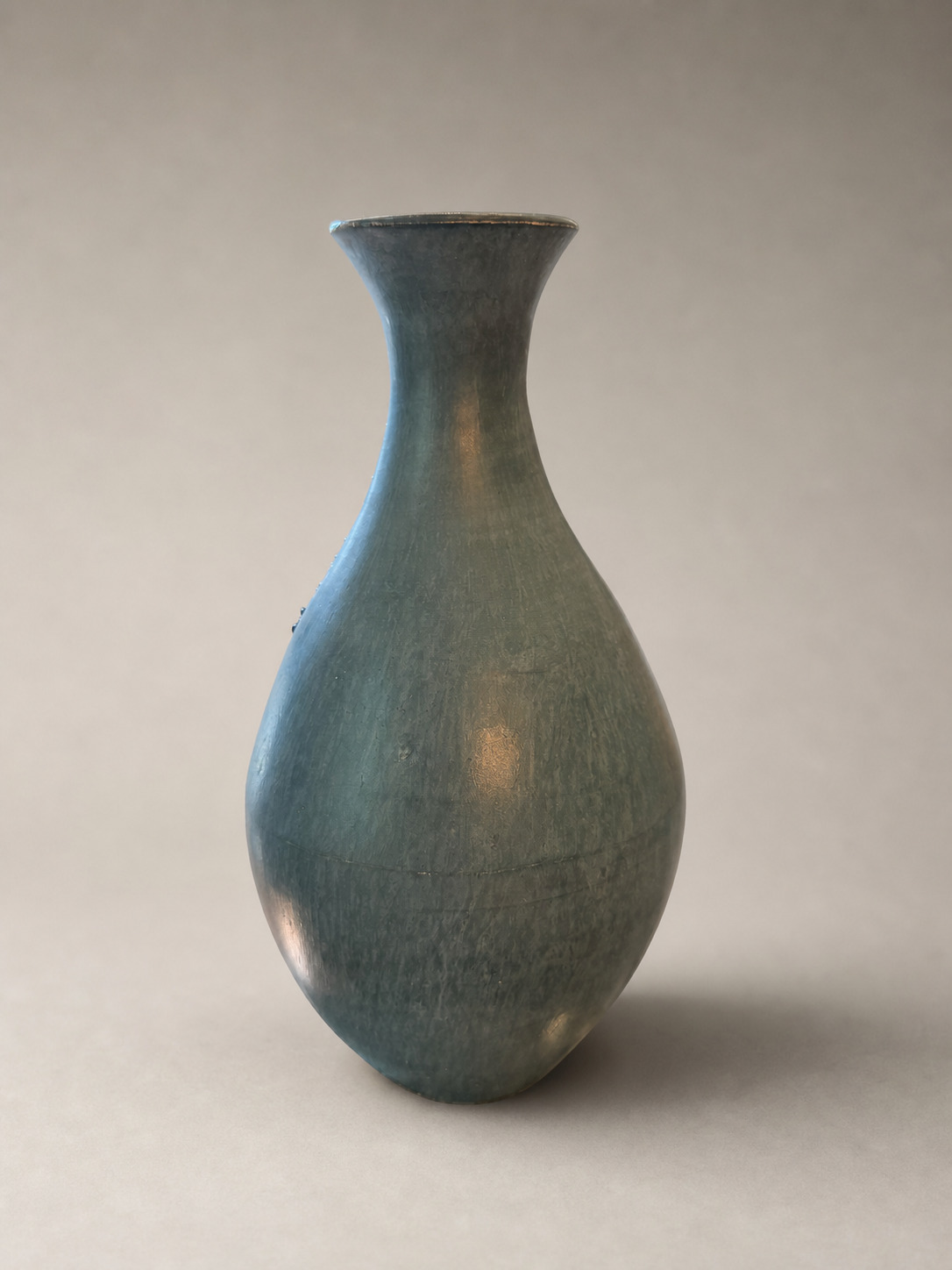
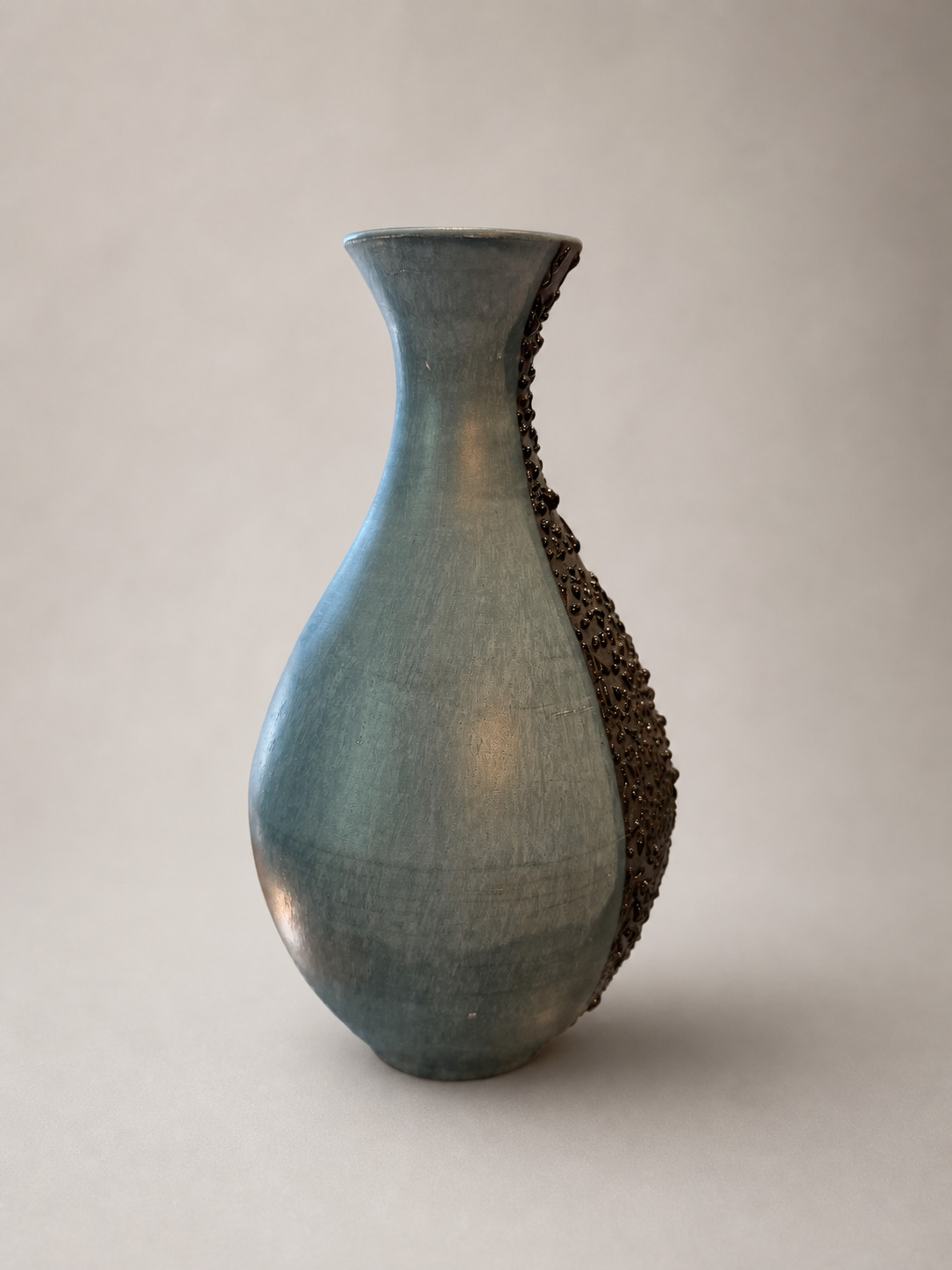
What interests me most is that terra sigillata does not erase the clay beneath it. On this bottle, the blue-green area stays satin and changes with the light. Fine throwing and finishing marks remain visible, so the rounded body is quiet without feeling blank.
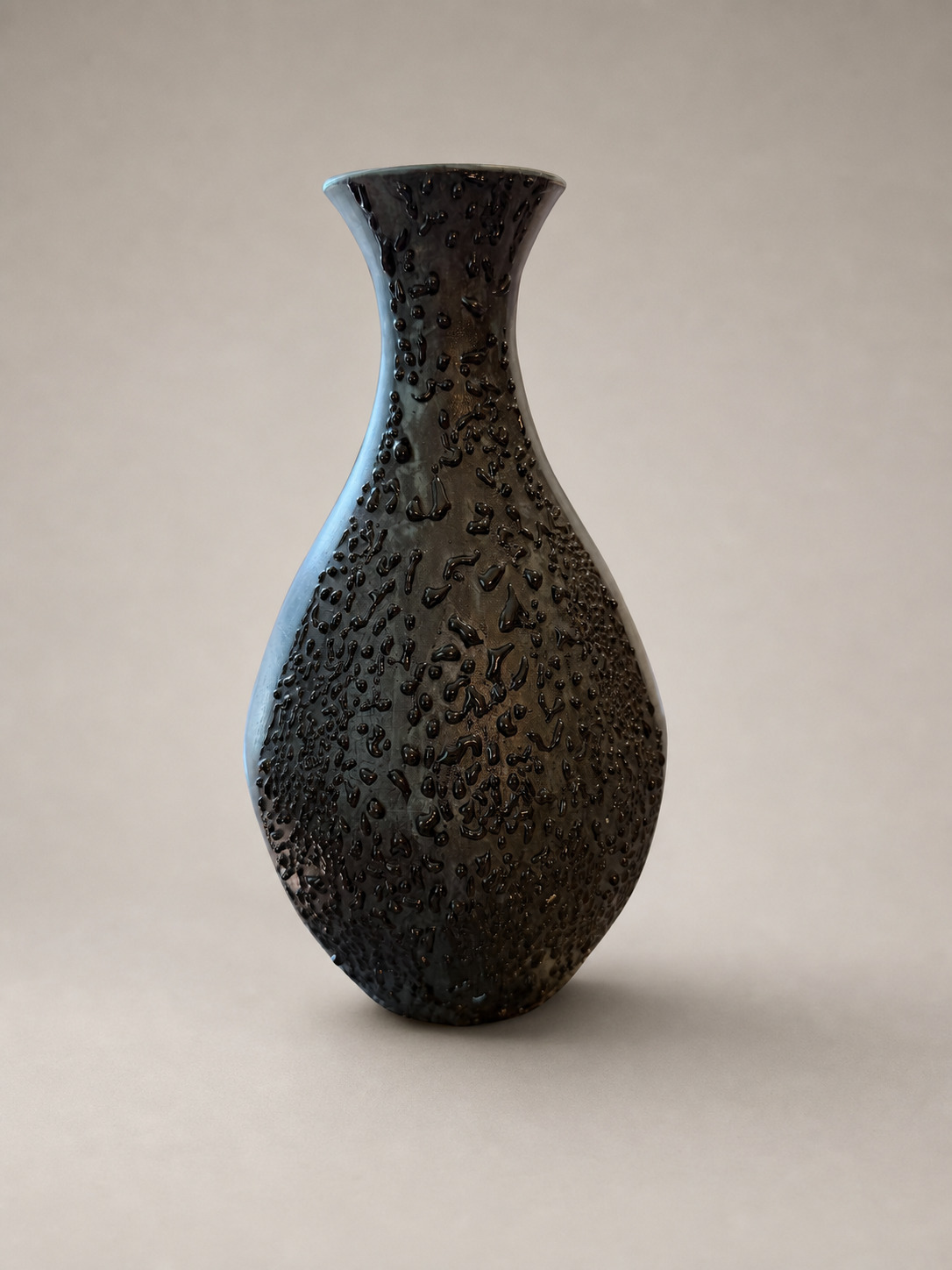
The raised black passage changes everything on the other side. Its glossy, pebble-like texture catches sharper highlights and runs from the foot through the shoulder and neck. One side is restrained, while the other is much more active and tactile. You have to turn the piece to see the full transition.
Refining, applying, and testing
This process takes patience. Once the finest clay has been separated, terra sigillata is normally brushed onto dry or nearly dry greenware in several very thin coats. It can be buffed while the surface still looks waxy. More is not better here. A heavy coating is more likely to crack or flake, and dust on the pot can keep it from adhering properly.
Firing temperature changes the result too. The familiar waxy sheen is strongest at lower temperatures, and the burnished quality generally softens as the temperature rises. That means the clay body, terra sigillata recipe, coating thickness, and firing schedule have to be tested together. Digitalfire and Ceramic Arts Network both have useful technical discussions of sedimentation, application, burnishing, and common adhesion problems.
Why the turn matters
A still photograph can show the color and texture, but a vessel never has only one view. As this piece turns, the neck opens, the shoulder shifts, and the black passage moves from the edge to the center before disappearing again. The rotation makes that change part of the whole piece, not just its decoration.
That is what I enjoy about terra sigillata. It can make the clay feel finished without hiding it. Light moves across the surface, but the material, the making, and the small irregularities are still part of the work.
You can see more one-of-a-kind work in the ceramic gallery, read about my crystalline glaze process, or look through the vessels currently listed under available work.