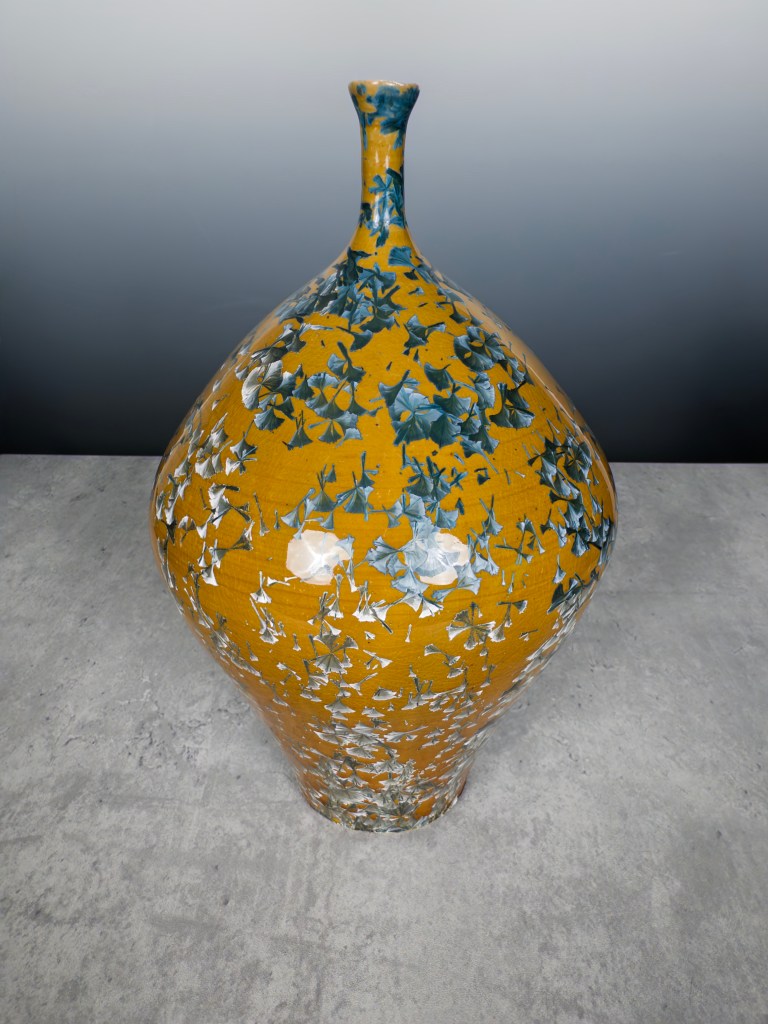
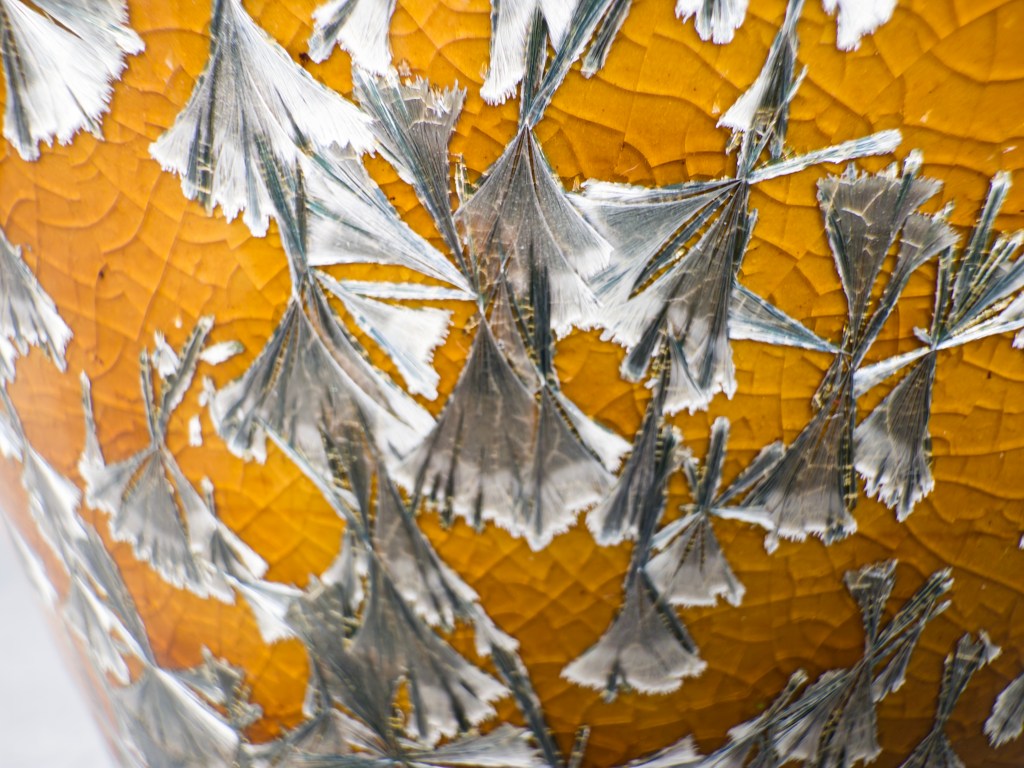
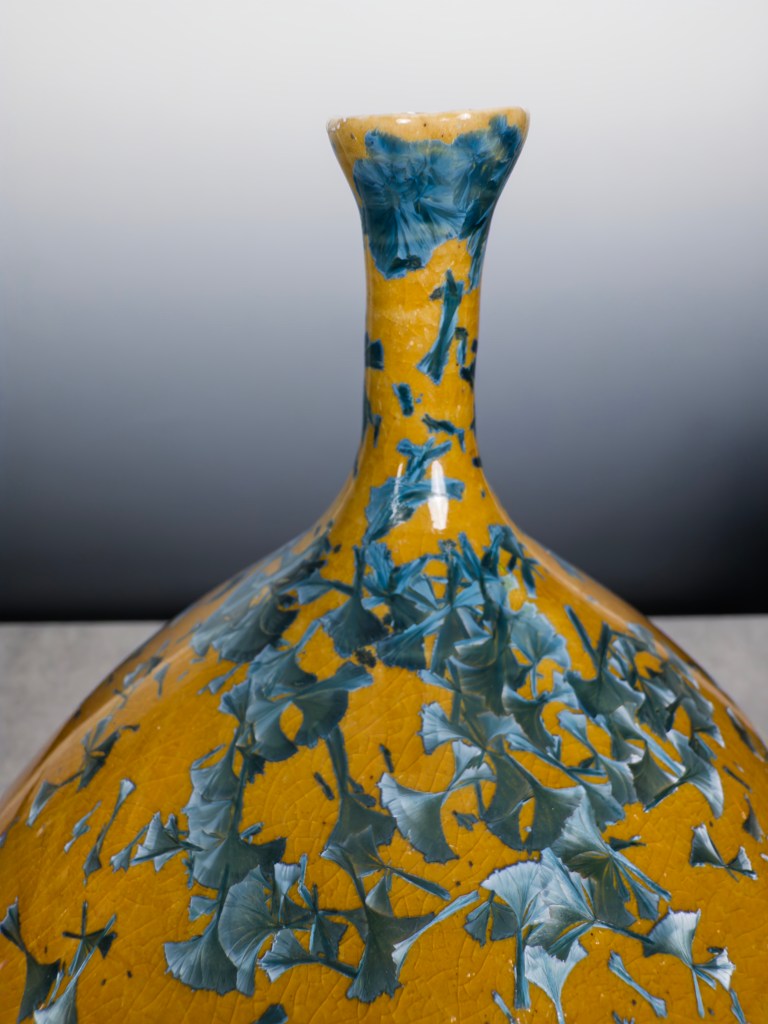
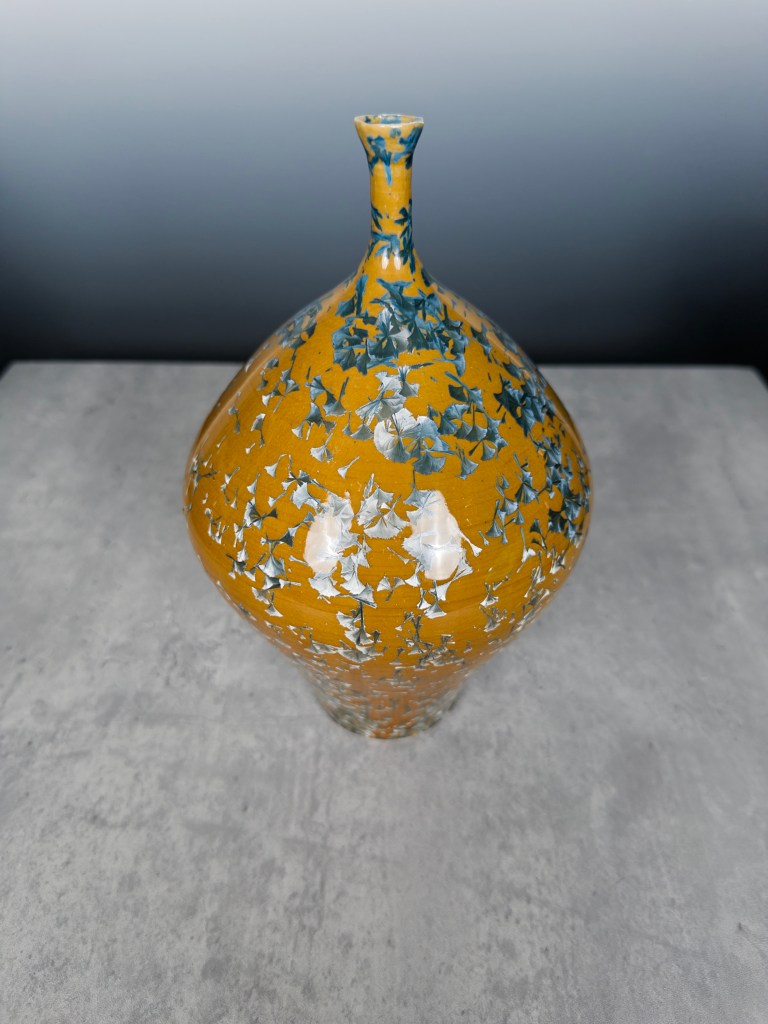
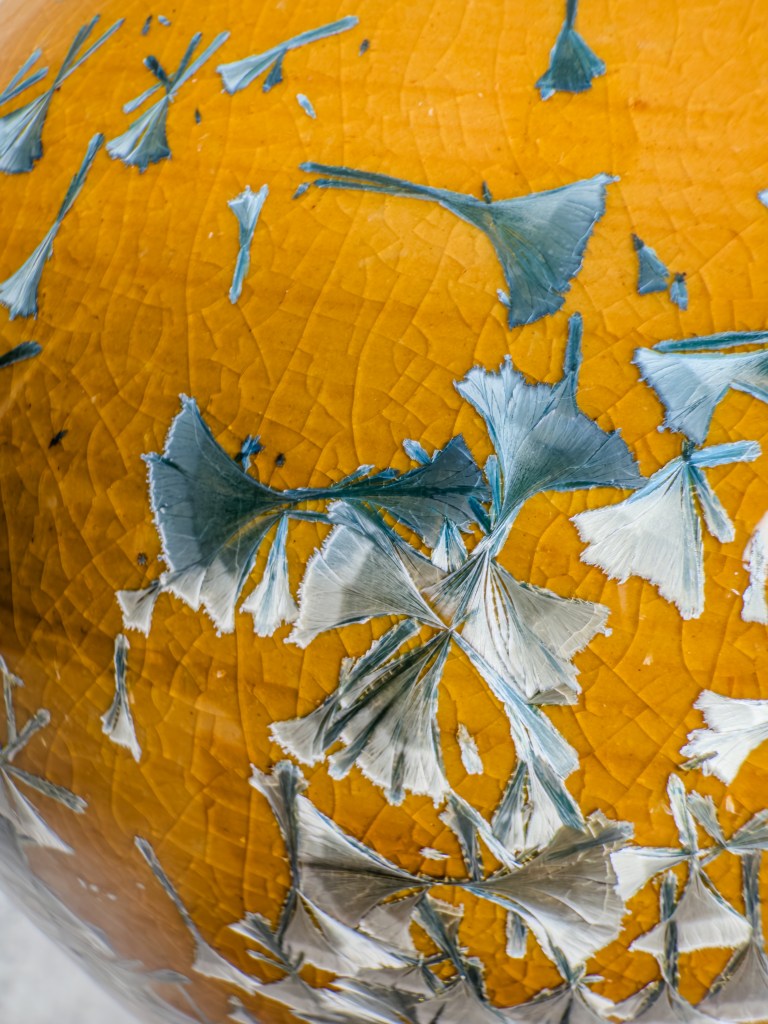
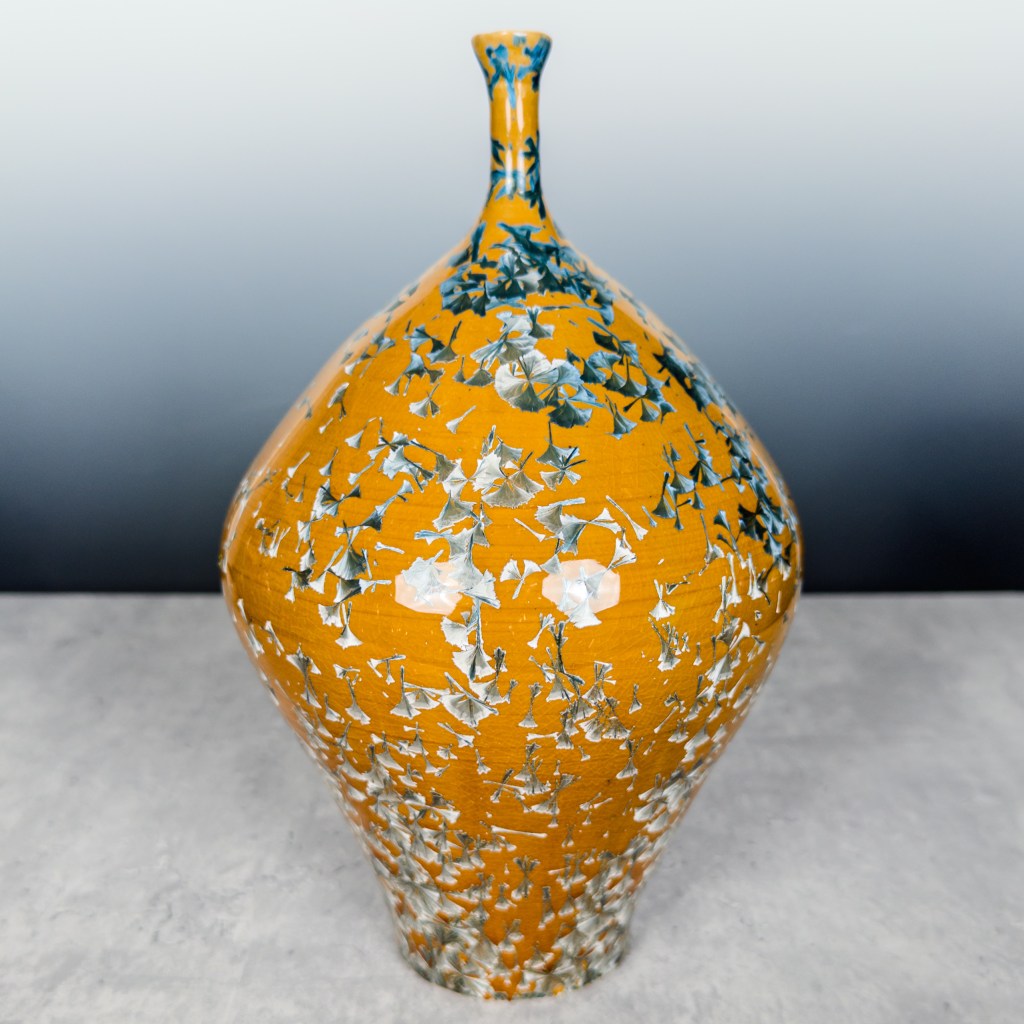
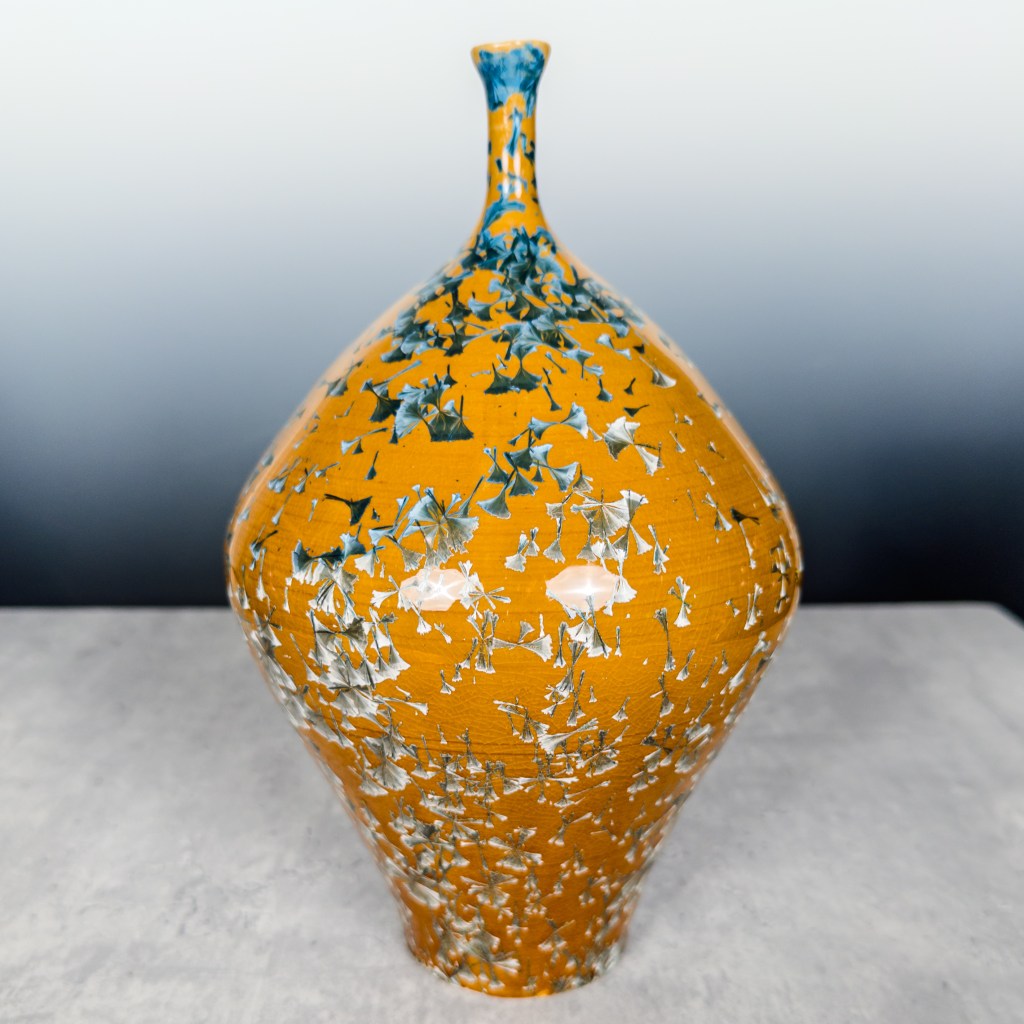
This crystalline-glazed pot began as a tall, elegant vessel thrown from white stoneware. It was glazed in a nickel-rich formula designed to encourage teal crystal growth during a controlled kiln cooling cycle. The result: striking fan-shaped teal crystals blooming across a warm golden background—each one unique, each frozen in time.
But the transformation didn’t stop there.
The Acid Bath Transformation
After firing, I immersed the pot in an acid bath for five days, leaving the upper portion exposed above the surface. This common but powerful post-firing technique alters the chemistry of nickel-based crystals where the acid makes contact. In this case, it had a dramatic effect:
- Where submerged: The original teal crystals were transformed into a luminous silver.
- Where exposed: The crystals retained their original teal hue.
Interestingly, there were no silver crystals present before the acid bath—only teal. The acid alone brought about the stunning silver conversion, creating a natural gradient as it crept up the surface of the form.
A Dialogue Between Chemistry and Form
This piece stands as a physical record of multiple stages of transformation—first through the heat and chemistry of the kiln, then through selective acid exposure. The result is a pot with a layered visual story, where crystal color and surface texture shift subtly as your eye travels from base to rim.
Whether you’re a fellow ceramicist or an admirer of glaze artistry, this piece invites close inspection and sparks curiosity about the alchemy of crystalline glazes.
 Barta Ceramics